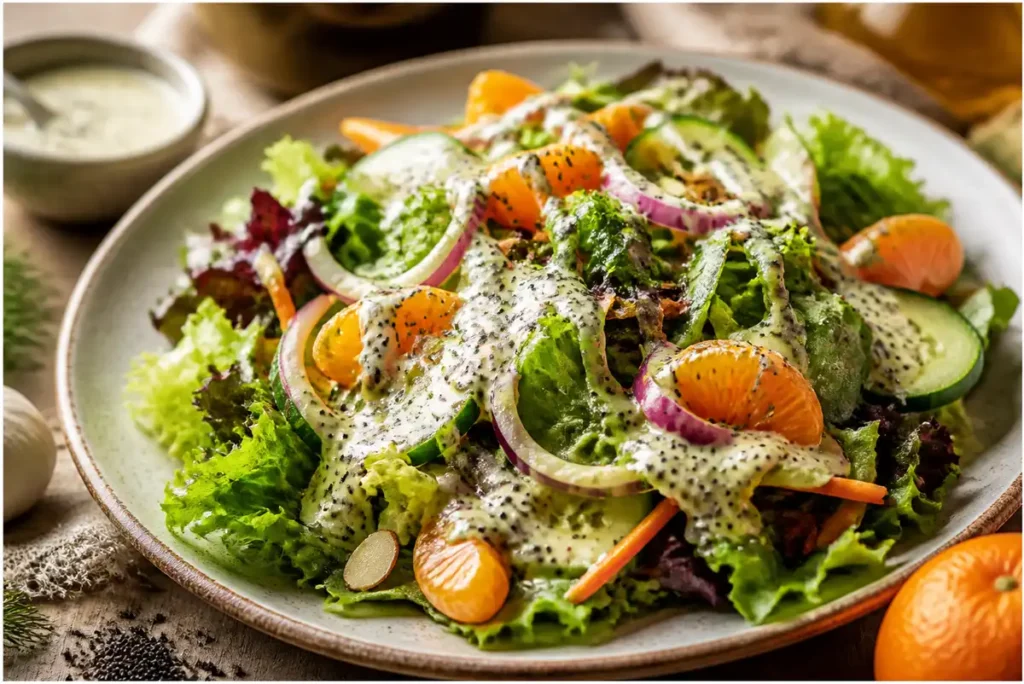
When a salad tastes flat, I usually don’t need more greens. I need a better dressing. This Poppy Seed Dressing Recipe for Fresh Salads is my favorite fix because it balances sweet honey, bright vinegar, creamy mayonnaise, and crunchy poppy seeds in one quick blend.
It tastes fresher than most bottled dressings, and you can adjust every flavor before it reaches the table. I love it over spinach, strawberries, and toasted almonds, but it also turns a simple cabbage slaw or chicken salad into something you’ll actually look forward to eating.
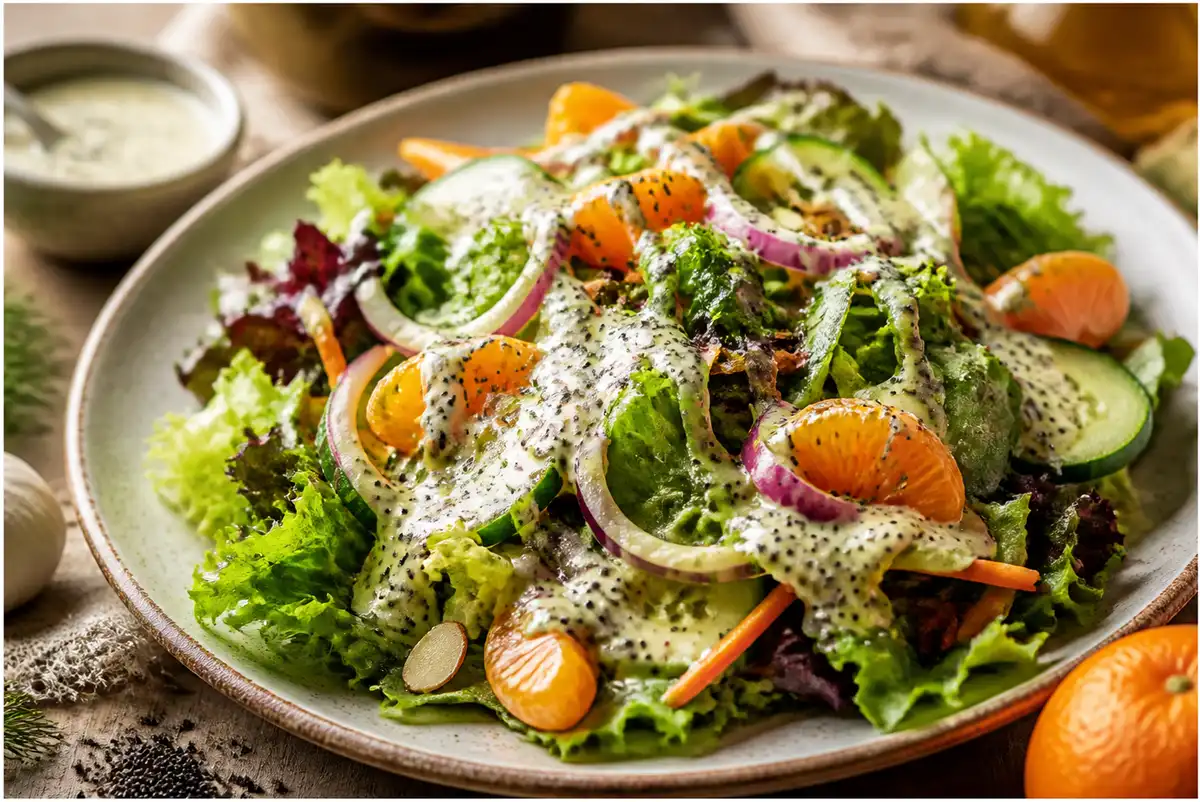
Table of Contents
- Why This Sweet and Tangy Dressing Deserves a Spot in Your Fridge
- What Makes This Homemade Poppy Seed Dressing Special
- Ingredients You’ll Need for This Poppy Seed Dressing Recipe for Fresh Salads
- Making Poppy Seed Dressing Recipe for Fresh Salads From Scratch
- Small Details That Make a Big Flavor Difference
- Variations and Smart Substitutions
- How to Serve Poppy Seed Dressing Recipe for Fresh Salads for Maximum Impact
- How to Store and Freeze This Fresh Salad Dressing
- Frequently Asked Questions
- Give Your Next Salad a Homemade Upgrade
Why This Sweet and Tangy Dressing Deserves a Spot in Your Fridge
- Ready in about 10 minutes with no cooking required.
- Uses simple pantry ingredients and beginner-friendly techniques.
- Works beautifully on green salads, fruit salads, slaw, grain bowls, and grilled chicken.
- Delivers bold, restaurant-style flavor without the overly sweet finish of many bottled dressings.
What Makes This Homemade Poppy Seed Dressing Special
The magic comes from contrast. Honey brings rounded sweetness, apple cider vinegar adds a clean tang, and Dijon mustard gives the dressing enough savory depth to keep it from tasting like dessert. Poppy seeds add a gentle crunch and a lovely speckled look throughout the sauce.
I use a little mayonnaise for body, but the dressing still feels bright rather than heavy. Whisking the oil in slowly creates a smooth, lightly creamy texture. Homemade wins here because you can control the sweetness, acidity, and thickness instead of accepting whatever comes in the bottle.
Ingredients You’ll Need for This Poppy Seed Dressing Recipe for Fresh Salads
Gather these ingredients before you start. Most are probably already in your kitchen, and each one has a clear job in this easy salad dressing recipe.
- 1/3 cup neutral oil: Use avocado, grapeseed, or light olive oil for a smooth base. Avoid strongly flavored extra-virgin olive oil unless you want a peppery finish.
- 1/4 cup apple cider vinegar: It supplies the sharp, fruity acidity. White wine vinegar works well as a milder substitute.
- 3 tablespoons honey: This sweetens the dressing and softens the vinegar. Use maple syrup for a vegan version.
- 2 tablespoons mayonnaise: Mayonnaise gives the dressing body and helps it cling to leafy greens. Use vegan mayonnaise if needed.
- 1 tablespoon Dijon mustard: Dijon adds savory flavor and helps the oil and vinegar stay blended.
- 1 tablespoon poppy seeds: These provide the signature crunch and delicate nutty flavor.
- 1/4 teaspoon fine sea salt: Salt sharpens every other ingredient.
- 1/8 teaspoon black pepper: A small amount adds gentle warmth without overpowering the fruit and vinegar.
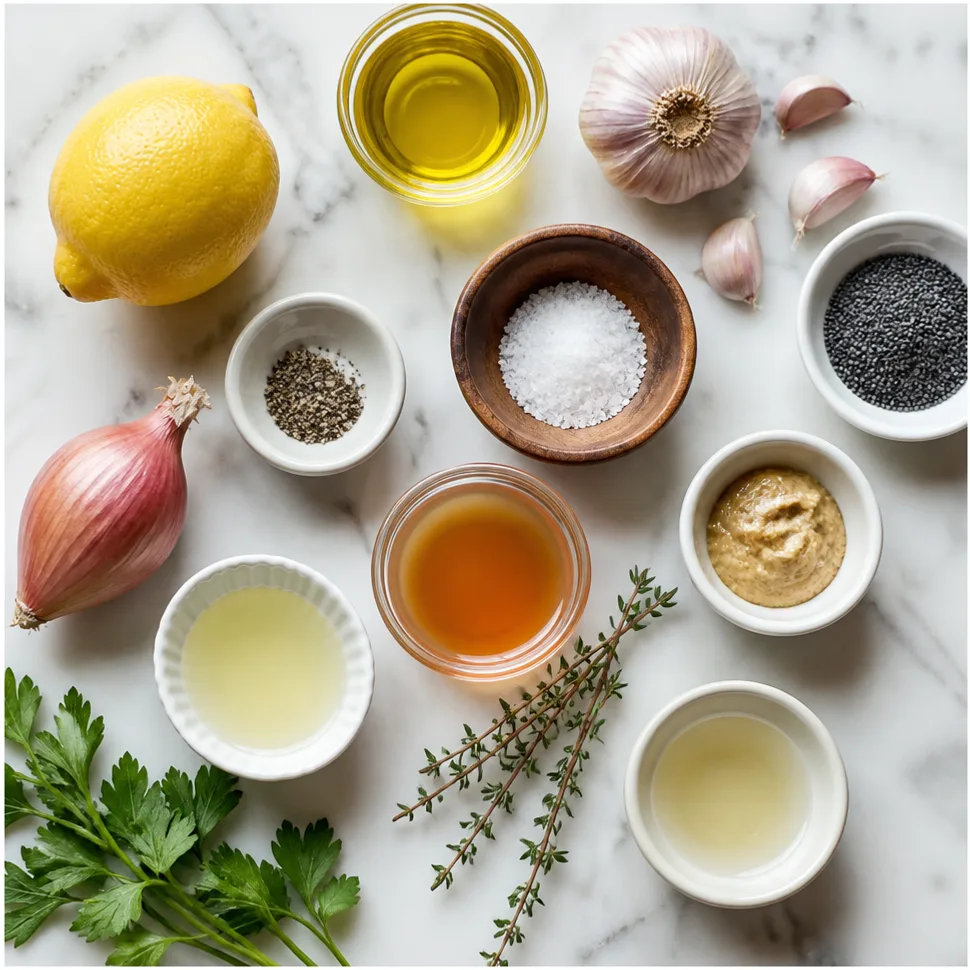
For a lighter dressing, replace half the mayonnaise with plain Greek yogurt. The result will be tangier and slightly thicker, so add a teaspoon or two of water if needed.
Making Poppy Seed Dressing Recipe for Fresh Salads From Scratch
- Whisk the vinegar, honey, mayonnaise, Dijon mustard, salt, and black pepper in a medium bowl. Keep whisking until the mixture looks smooth and the honey no longer sits on the bottom.
- Stream in the oil slowly while whisking constantly. A thin, steady pour creates a creamy emulsion, while adding the oil all at once can leave the dressing separated and slick.
- Stir in the poppy seeds once the dressing looks glossy and evenly blended. The finished texture should coat the back of a spoon but still pour easily.
- Taste the dressing with a lettuce leaf or a small piece of fruit. Add a pinch more salt for depth, a teaspoon of vinegar for extra brightness, or a drizzle of honey if the flavor feels too sharp.
- Rest the dressing for 10 minutes before serving. This short pause lets the poppy seeds soften slightly and gives the flavors time to settle.
- Drizzle the dressing over freshly washed and thoroughly dried greens just before serving. Toss gently so every leaf gets a light coating instead of pooling at the bottom of the bowl.
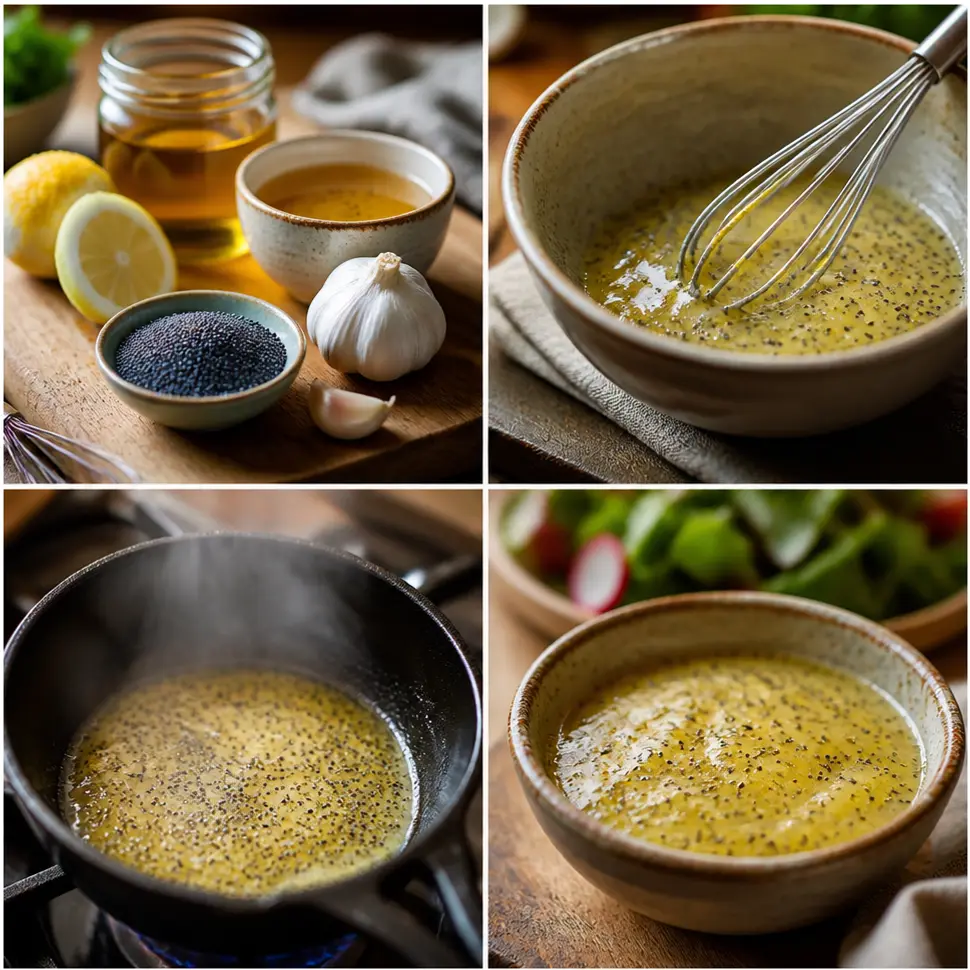
If the dressing separates during mixing, don’t panic. Whisk in a teaspoon of warm water, then slowly add the separated dressing back into the bowl. It should come together again with a smooth, creamy appearance.
Small Details That Make a Big Flavor Difference
- Dry your greens well: Water left on lettuce dilutes a fresh salad dressing and prevents it from clinging. A salad spinner makes this much easier.
- Whisk the oil slowly: The steady pour matters more than speed. Add the oil in a narrow stream while whisking continuously.
- Adjust after chilling: Cold dressing tastes less sweet and less aromatic than room-temperature dressing. Taste it again before serving and make small adjustments.
- Thin it carefully: Add water one teaspoon at a time if the dressing becomes too thick. A little extra vinegar can thin it too, but it will also make the flavor sharper.
- Toast your toppings: Toasted almonds, pecans, or sunflower seeds bring out the dressing’s nutty poppy seed flavor and add welcome crunch.
- Dress lightly: Start with 1 to 2 tablespoons per serving. You can always add more, but rescuing overdressed lettuce is much harder than reaching for the bottle again.
Variations and Smart Substitutions
- Make it vegan: Replace honey with maple syrup and use vegan mayonnaise. The dressing will have a slightly deeper, caramel-like sweetness.
- Make it dairy-free: The base recipe is naturally dairy-free as long as your mayonnaise contains no dairy ingredients.
- Make it gluten-free: Choose certified gluten-free Dijon mustard and mayonnaise if cross-contact is a concern. The remaining ingredients are naturally gluten-free.
- Add citrus: Replace two tablespoons of the vinegar with fresh orange juice for a sunny orange poppy seed vinaigrette.
- Make it spicy: Whisk in 1/4 teaspoon of cayenne or 1 teaspoon of finely minced jalapeño. Start small because heat becomes more noticeable after chilling.
- Make it creamier: Add another tablespoon of mayonnaise or Greek yogurt for a thicker dressing that works well as a fruit dip.
For another bright option in your meal-prep rotation, try my honey lime dressing recipe. Its citrus flavor is especially good with avocado, black beans, and grilled corn.
How to Serve Poppy Seed Dressing Recipe for Fresh Salads for Maximum Impact
For a classic combination, toss it with baby spinach, sliced strawberries, blueberries, red onion, and toasted almonds. Add grilled chicken or salmon when you want to turn the salad into a complete lunch or light dinner.
This dressing also works wonderfully with shredded cabbage, carrots, and green onions. Let the slaw sit for 15 minutes before serving so the vegetables absorb some of the sweet and tangy flavor without losing all their crunch.
For a summer spread, serve it beside a large fruit salad or spoon it over mixed berries and melon. I also like setting it out with extra toppings so everyone can build a bowl to taste. If you enjoy herb-forward flavors, my chimichurri sauce for salads makes a fresh, savory alternative for the same kind of meal.
[ SERVING_IMAGE]How to Store and Freeze This Fresh Salad Dressing
Store the dressing in a clean glass jar or airtight container in the refrigerator for up to 7 days. Because it contains mayonnaise and fresh ingredients, keep it chilled and return it to the refrigerator promptly after serving.
The oil may firm up slightly in the refrigerator, so let the jar sit at room temperature for 10 to 15 minutes before shaking. Shake or whisk well before using, then check the texture and add a teaspoon of water if it has thickened too much.
I don’t recommend freezing this dressing. Freezing can cause the mayonnaise and oil to separate, leaving a grainy or broken texture after thawing. Make it up to 3 days ahead for the best flavor and smoothest consistency.
For general guidance on keeping prepared foods cold and handling leftovers safely, consult the FDA’s food safety advice and avoid leaving the dressing at room temperature for more than 2 hours.
This dressing takes 10 minutes to prep, requires no cooking, yields about 1 cup, serves 8, and is easy enough for beginner cooks.
Frequently Asked Questions
Use an equal amount of pure maple syrup instead of honey. Maple syrup makes the dressing vegan and gives it a slightly warmer flavor.
How long does homemade poppy seed dressing last in the fridge?Homemade poppy seed dressing lasts up to 7 days in an airtight container in the refrigerator. Shake it well before each use and discard it if the smell or texture changes.
Can you freeze poppy seed salad dressing?You should not freeze poppy seed salad dressing because the mayonnaise and oil can separate and become grainy. Make a fresh batch instead, since the recipe takes about 10 minutes.
Is poppy seed dressing gluten-free?Poppy seed dressing is naturally gluten-free when the mustard and mayonnaise are gluten-free. Check product labels if you need to avoid cross-contact or hidden wheat ingredients.
Does poppy seed dressing contain dairy?This recipe is dairy-free when prepared with standard dairy-free mayonnaise. For a creamy variation, choose dairy-free yogurt rather than regular Greek yogurt.
Why is my poppy seed dressing too thick?Thin thick poppy seed dressing with water, adding one teaspoon at a time until it pours easily. Let refrigerated dressing warm slightly before thinning because cold mayonnaise naturally becomes firmer.
Can I make poppy seed dressing ahead of time?You can make poppy seed dressing up to 3 days ahead and keep it refrigerated. Preparing it in advance gives the poppy seeds time to soften and the sweet, tangy flavors time to blend.
How do I fix separated poppy seed vinaigrette?Fix separated poppy seed vinaigrette by whisking a teaspoon of warm water in a clean bowl and slowly adding the broken dressing. Pouring the dressing back gradually helps rebuild a smooth emulsion.
Give Your Next Salad a Homemade Upgrade
This Poppy Seed Dressing Recipe for Fresh Salads is the kind of homemade sauce that earns a permanent place in the refrigerator. It comes together quickly, tastes balanced instead of sugary, and makes simple ingredients feel special.
Try it on your favorite salad combination, then leave a comment and rate the recipe so I know how it worked in your kitchen. Save it for your next meal-prep day, and share it on pinterest with anyone who loves easy homemade salad dressing as much as I do.