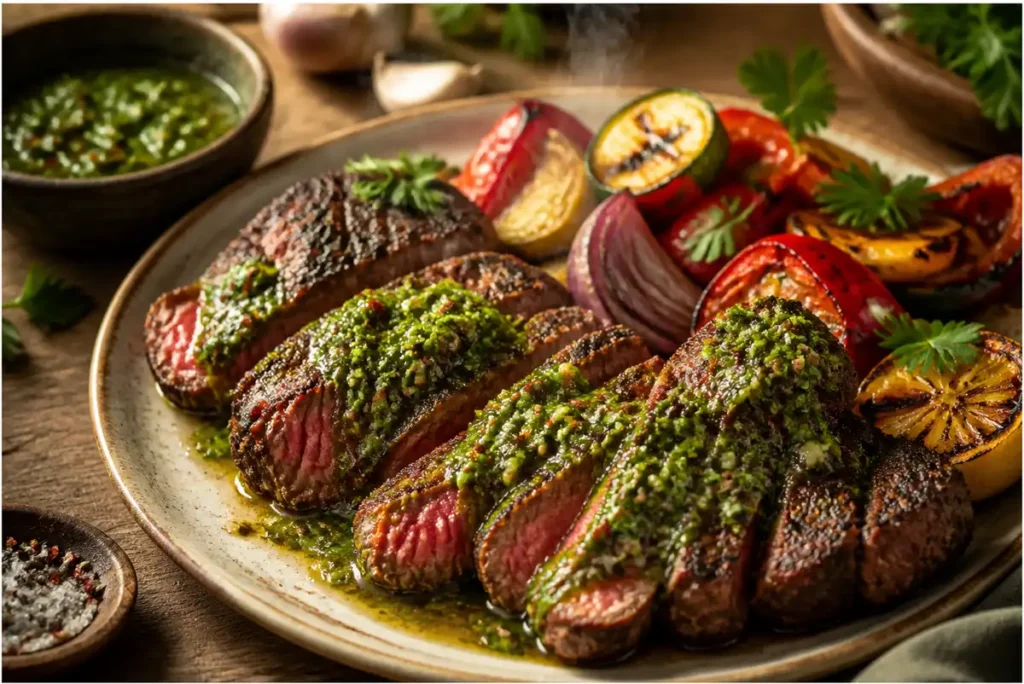
A good grill doesn’t need much help, but the right sauce can turn a simple steak, chicken breast, or tray of vegetables into something you’ll remember. This Chimichurri Sauce Recipe for Grilled Meats and Vegetables brings fresh parsley, garlic, vinegar, olive oil, and a little chili heat together in about 10 minutes.
I love it because it tastes bright and lively instead of heavy or overly sweet. It cuts through smoky grilled foods, wakes up roasted vegetables, and makes leftovers feel planned rather than rescued. Once you make it fresh, jarred herb sauces tend to taste a little sleepy.
Chimichurri has strong roots in Argentine cooking, where fresh herbs and bold seasonings often accompany grilled meats. You can learn more about Argentina’s food culture through Argentina Travel: Gastronomy while you’re planning your next grill night.
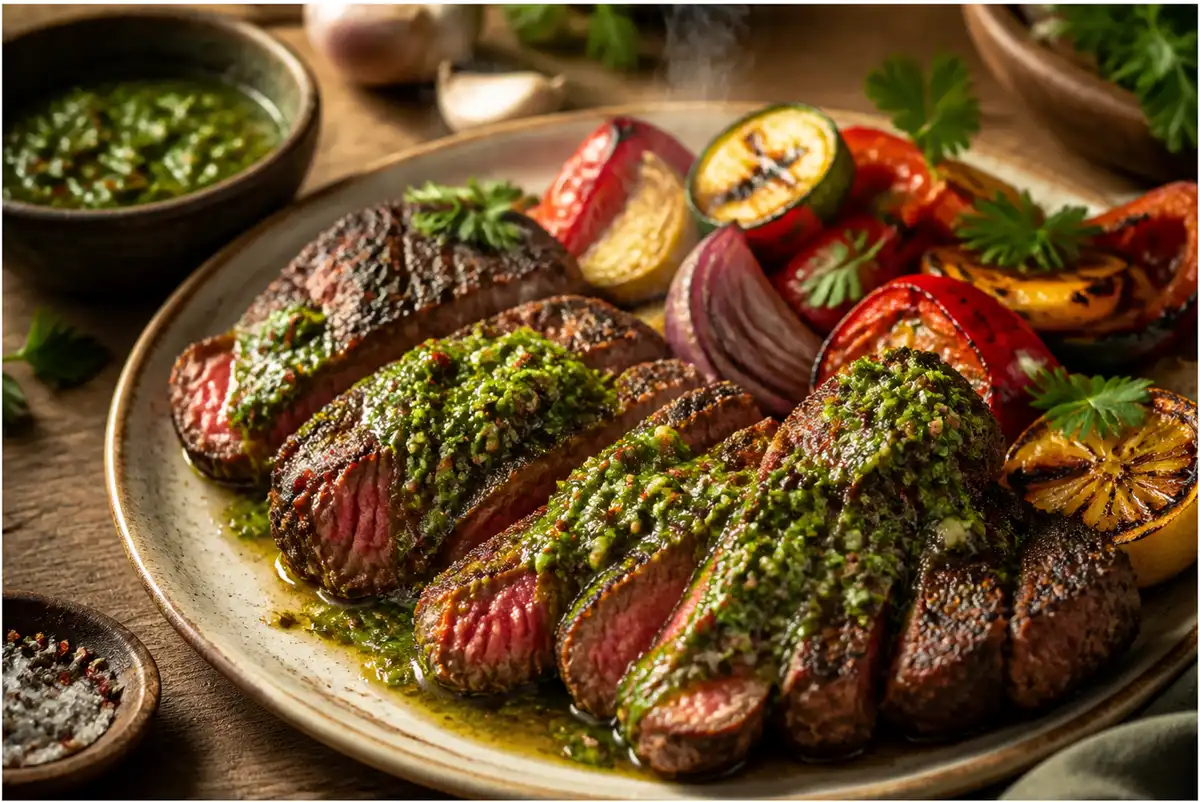
Table of Contents
- Why This Sauce Deserves a Permanent Spot in Your Kitchen
- What Makes This Homemade Chimichurri Stand Out
- Ingredients for a Bright Parsley Garlic Chimichurri Sauce
- Making Chimichurri Sauce Recipe for Grilled Meats and Vegetables From Scratch
- Small Details That Make a Big Flavor Difference
- Variations and Easy Substitutions for Every Grill Night
- How to Serve Chimichurri Sauce Recipe for Grilled Meats and Vegetables
- How to Store and Freeze Fresh Chimichurri
- Frequently Asked Questions
- Make This Fresh Herb Sauce Part of Your Next Cookout
Why This Sauce Deserves a Permanent Spot in Your Kitchen
- It’s ready in under 15 minutes. There’s no simmering, blending, or special equipment required.
- It uses simple ingredients. Fresh parsley, garlic, vinegar, olive oil, and dried spices do all the heavy lifting.
- It works on almost everything. Serve it as chimichurri sauce for grilled meats, chimichurri sauce for vegetables, a dipping sauce, or a bright finishing sauce for grains.
- It’s naturally vegan, dairy-free, and gluten-free. That makes it an easy choice when you’re feeding a mixed crowd.
What Makes This Homemade Chimichurri Stand Out
The flavor comes from contrast. Fresh parsley tastes grassy and clean, garlic adds savory intensity, red wine vinegar supplies a sharp tang, and olive oil rounds everything out. Dried oregano gives the sauce a warm, earthy note, while red pepper flakes add just enough background heat.
The most important trick is chopping the herbs by hand instead of pulverizing them in a blender. A little texture makes the sauce feel fresh and rustic, while blending can turn parsley dark and muddy. Homemade also lets you adjust the vinegar, salt, garlic, and spice before the sauce reaches the table, which is exactly where store-bought versions often fall short.
Ingredients for a Bright Parsley Garlic Chimichurri Sauce
These amounts make about 1 cup of sauce, enough for four to six servings. Let the ingredients sit together briefly before serving so the garlic and herbs can flavor the oil.
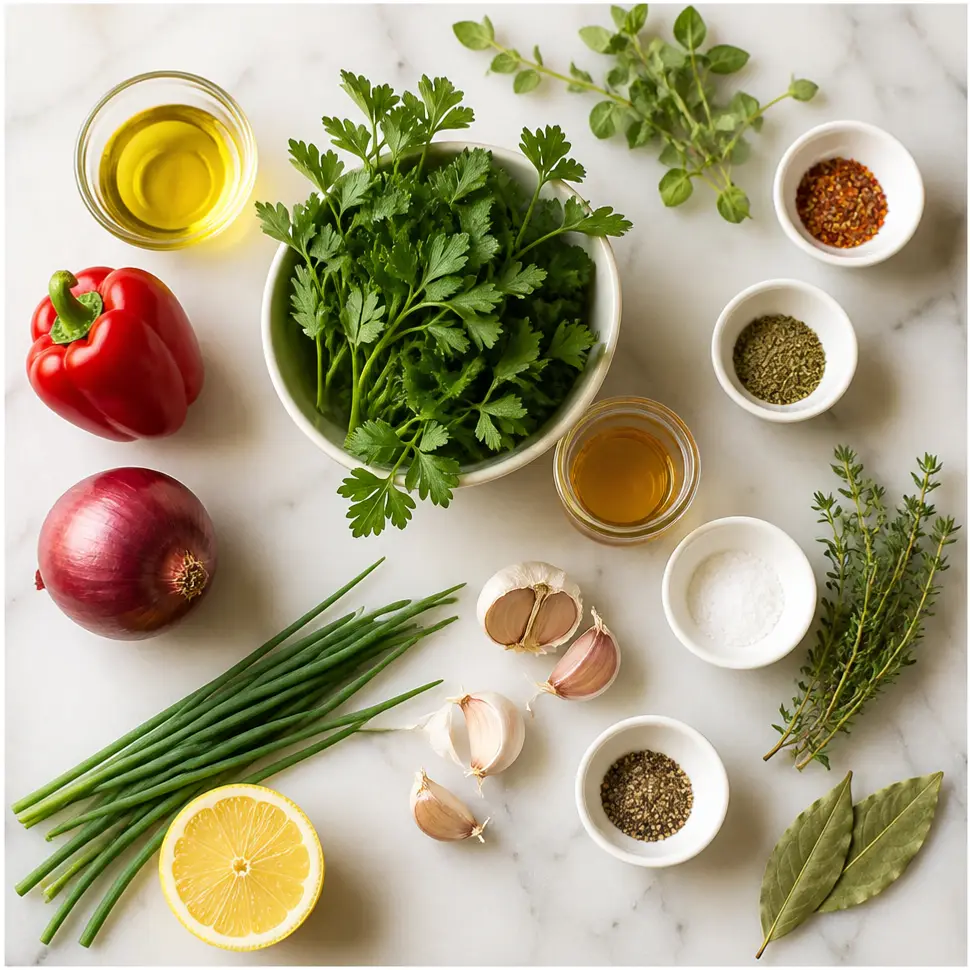
- 1 cup finely chopped fresh flat-leaf parsley: The main herbal base. Curly parsley works, but flat-leaf parsley has a fuller flavor.
- 3 garlic cloves, finely minced: Adds savory depth. For a gentler sauce, use 2 cloves.
- 2 tablespoons finely chopped fresh oregano: Fresh oregano adds a fragrant, peppery edge. Substitute 2 teaspoons dried oregano if needed.
- 1/4 cup red wine vinegar: Gives the sauce its signature tang. Sherry vinegar creates a softer, slightly nutty flavor.
- 1/2 cup extra-virgin olive oil: Carries the flavors and creates a spoonable consistency. Use a mild olive oil if your extra-virgin oil tastes especially peppery.
- 1/2 teaspoon red pepper flakes: Adds gentle heat. Reduce it for a mild version or increase it for a spicier finish.
- 3/4 teaspoon kosher salt: Sharpens every flavor. Start with less if your grilled food is already heavily seasoned.
- 1/4 teaspoon freshly ground black pepper: Adds a subtle savory bite.
- 1 tablespoon finely minced shallot: Adds mild onion flavor and a little texture. Red onion works as a stronger substitute.
Making Chimichurri Sauce Recipe for Grilled Meats and Vegetables From Scratch
- Wash the parsley and oregano, then dry them very well. Excess water can dilute the sauce, so spin the herbs in a salad spinner or pat them thoroughly with clean towels.
- Chop the parsley, oregano, and shallot by hand until the pieces are small but still visible. Aim for a loose, textured mixture rather than a paste.
- Mince the garlic finely. Smaller pieces spread the garlic flavor evenly, while large chunks can taste harsh in a no-cook sauce.
- Combine the herbs, garlic, shallot, red pepper flakes, salt, and black pepper in a medium bowl. Stir gently so the salt begins seasoning the herbs without crushing them.
- Whisk in the red wine vinegar. The mixture should smell sharp, fresh, and garlicky. Let it stand for 5 minutes to soften the raw onion and garlic slightly.
- Drizzle in the olive oil while stirring continuously. The finished sauce should look loose and glossy, with herbs suspended throughout instead of floating in a separate oil layer.
- Taste the sauce with a clean spoon and adjust the balance. Add vinegar for more brightness, olive oil for a softer finish, salt for fuller flavor, or red pepper flakes for extra heat.
- Rest the chimichurri for at least 10 minutes before serving. The color should remain bright green, the aroma should be intensely herbal, and the texture should be spoonable rather than thick.
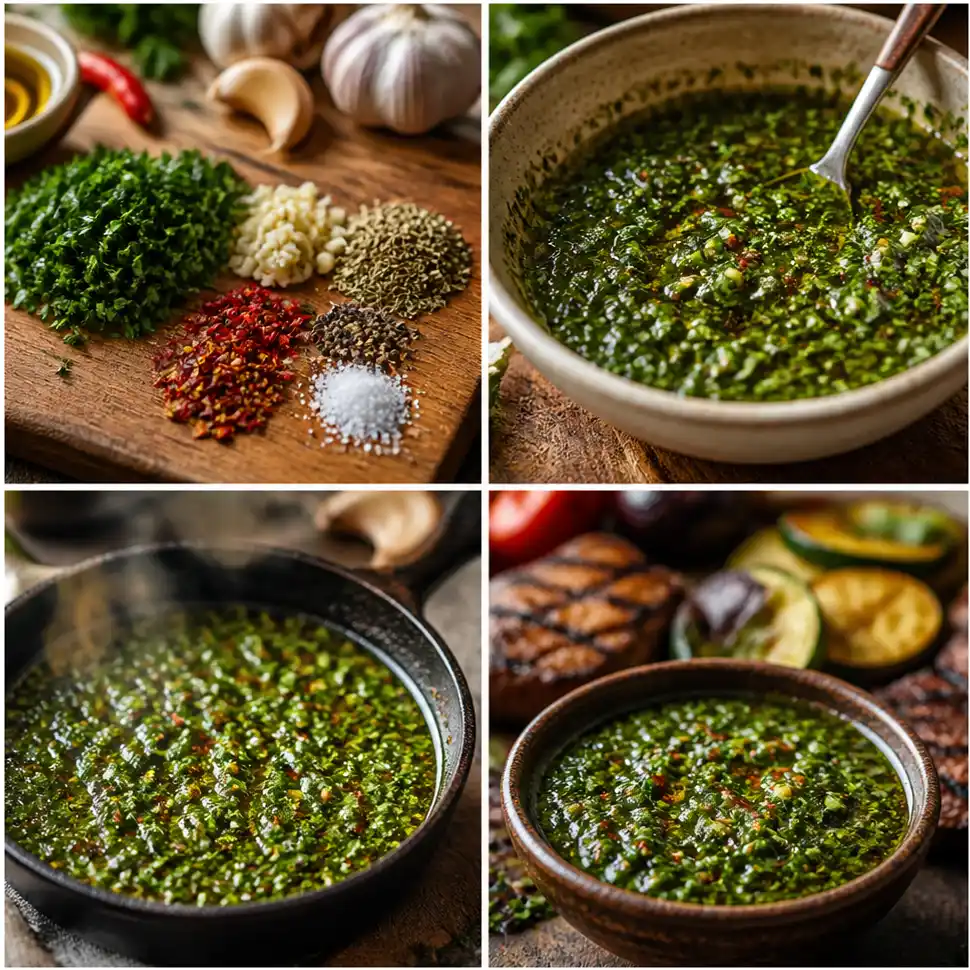
For the best result, spoon the sauce over food after grilling instead of cooking it directly over high heat. The fresh herbs taste liveliest when they stay away from the flames.
Small Details That Make a Big Flavor Difference
- Dry the herbs completely. Water weakens the vinegar and oil balance and can make the sauce taste flat.
- Don’t blend the sauce. A food processor is fast, but it can bruise the herbs and create a thick green paste. Hand chopping gives you the classic rustic texture.
- Adjust after resting. The garlic and herbs become stronger as they sit, so taste again after 10 to 15 minutes before adding more salt or vinegar.
- Fix a thick sauce with olive oil. Add it one teaspoon at a time until the chimichurri drizzles easily from a spoon.
- Fix a thin or oily sauce with herbs. Stir in another tablespoon of chopped parsley, then let the mixture rest for a few minutes.
- Use a clean spoon each time. This keeps the sauce fresher in the refrigerator and prevents cross-contamination from grilled meat juices.
Variations and Easy Substitutions for Every Grill Night
- Mild chimichurri: Leave out the red pepper flakes and add a little extra parsley for a gentler flavor.
- Spicy chimichurri: Add a finely minced Fresno chile or jalapeño. Remove the seeds for less heat.
- Cilantro version: Replace half the parsley with fresh cilantro for a brighter, citrusy profile that pairs especially well with chicken and shrimp.
- Lemon herb version: Replace 1 tablespoon of the vinegar with fresh lemon juice and add a little lemon zest.
- Smoky version: Add 1/4 teaspoon smoked paprika. It gives vegetables and grilled mushrooms a deeper, barbecue-friendly flavor.
- Extra-herby version: Add a few tablespoons of finely chopped mint or basil. Mint works beautifully with lamb, while basil suits grilled zucchini and tomatoes.
If you’re building a full grilling menu, pair this fresh herb sauce with teriyaki sauce for grilling so guests can choose between a tangy green topping and a sweet-savory glaze.
How to Serve Chimichurri Sauce Recipe for Grilled Meats and Vegetables
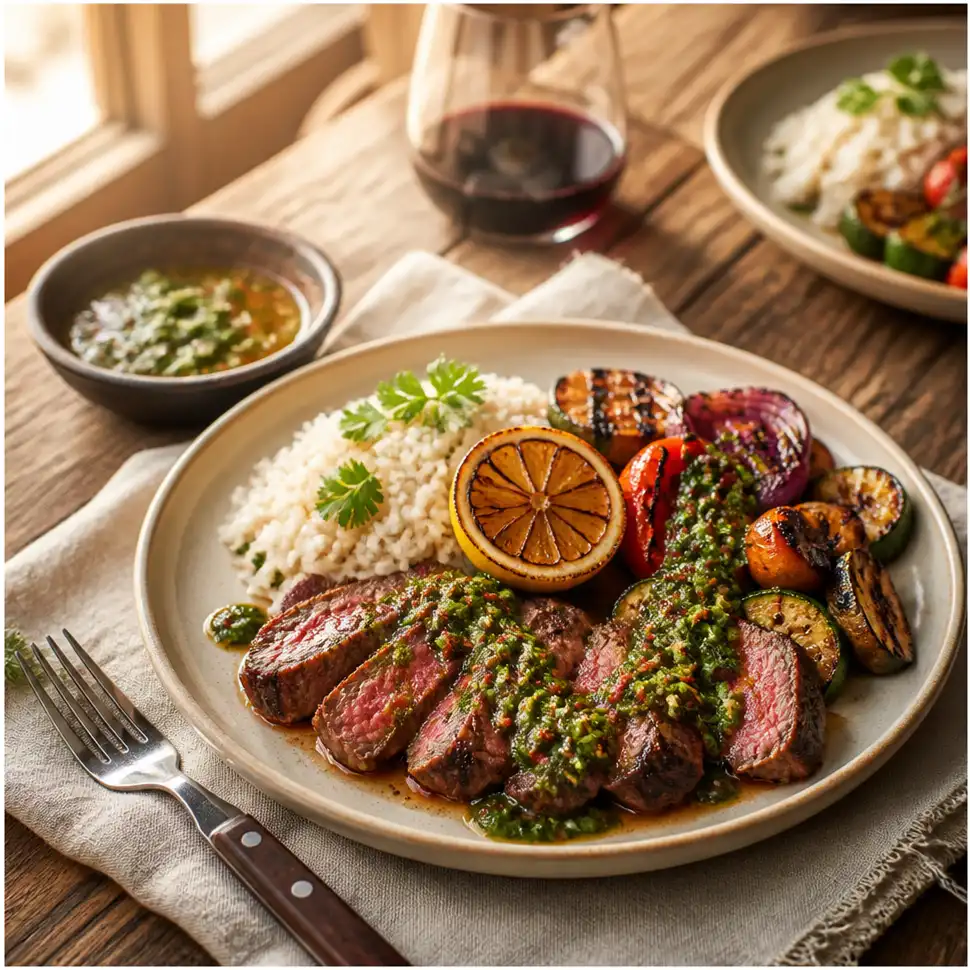
Spoon chimichurri over grilled steak, chicken, pork, lamb, shrimp, or firm fish just before serving. The sauce adds freshness to smoky food without hiding the charred flavor you worked to create.
For vegetables, drizzle it over grilled zucchini, eggplant, bell peppers, corn, asparagus, mushrooms, or cauliflower. It also makes a colorful topping for baked potatoes, white beans, rice bowls, and crusty bread.
For a casual dinner party, place the sauce in a small bowl with a serving spoon so everyone can add their own. If you’re planning leftovers, toss it with warm grains or use it as a sandwich spread the next day. A simple salad and roasted potatoes turn it into a complete weeknight meal.
Keep another versatile sauce in the rotation with this stir fry sauce recipe, especially when your weeknight menu shifts from the grill to the skillet.
How to Store and Freeze Fresh Chimichurri
Store chimichurri in an airtight glass container in the refrigerator for up to 5 days. Press a piece of plastic wrap directly against the surface before sealing if you want to limit air exposure and help preserve its color.
The herbs may darken slightly as the sauce rests, but it should still smell fresh and garlicky. Stir it well before serving, then let it sit at room temperature for 10 to 15 minutes so the olive oil loosens.
You can freeze chimichurri for up to 3 months. Spoon it into ice cube trays, freeze until solid, then transfer the cubes to a freezer bag. Thaw a cube in the refrigerator or at room temperature, and stir in a splash of fresh vinegar or olive oil if the texture looks separated.
Don’t reheat chimichurri on the stove. Add it to hot food after cooking, because high heat dulls the fresh herbs and can make the garlic taste bitter.
This sauce takes 10 minutes to prep, requires no cooking, yields about 1 cup, serves 4 to 6 people, and is easy enough for beginner cooks.
Frequently Asked Questions
You can use sherry vinegar, white wine vinegar, or fresh lemon juice instead of red wine vinegar. Sherry vinegar gives the sauce a rounded flavor, while lemon juice makes it especially bright for vegetables and seafood.
How long does homemade chimichurri last in the refrigerator?Homemade chimichurri lasts up to 5 days in an airtight container in the refrigerator. Stir it before serving and discard it if it develops an unpleasant smell, mold, or unusual bubbling.
Can you freeze Chimichurri Sauce Recipe for Grilled Meats and Vegetables?Yes, you can freeze chimichurri for up to 3 months. Freeze it in ice cube trays, thaw only what you need, and refresh the texture with a small splash of olive oil or vinegar.
Is chimichurri sauce gluten-free and vegan?Yes, this chimichurri sauce is naturally gluten-free, vegan, and dairy-free. Check packaged spices and vinegar labels if you’re cooking for someone with a severe allergy or strict dietary requirement.
Why is my chimichurri sauce too oily?Your chimichurri may be too oily if the herbs are not finely chopped or if the oil amount is too high for your preferred texture. Stir in extra chopped parsley and a teaspoon of vinegar to bring the mixture back into balance.
How far ahead can I make chimichurri sauce?You can make chimichurri up to 24 hours ahead and keep it covered in the refrigerator. Let it sit at room temperature for 10 to 15 minutes, then stir it well before serving.
Does chimichurri sauce need to be reheated?Chimichurri should not be reheated because high heat damages the fresh herbs and can make the garlic taste bitter. Spoon it over hot grilled meat or vegetables immediately after cooking.
What should I do if my chimichurri tastes too sharp?Add olive oil one teaspoon at a time until the vinegar softens, then taste again. A small pinch of salt and a few extra chopped herbs can also round out an overly sharp sauce.
Make This Fresh Herb Sauce Part of Your Next Cookout
This easy homemade chimichurri is one of those recipes that earns its place by doing more than one job. It brings grilled meats to life, gives vegetables a fresh finish, and turns simple leftovers into something worth sitting down for.
Make a batch before your next barbecue or weeknight dinner, then adjust the garlic, vinegar, and chili to suit your table. If you try it, leave a comment and rate the recipe, save it for your next grilling day, and share it on Pinterest so another home cook can enjoy that bright spoonful of sauce too.