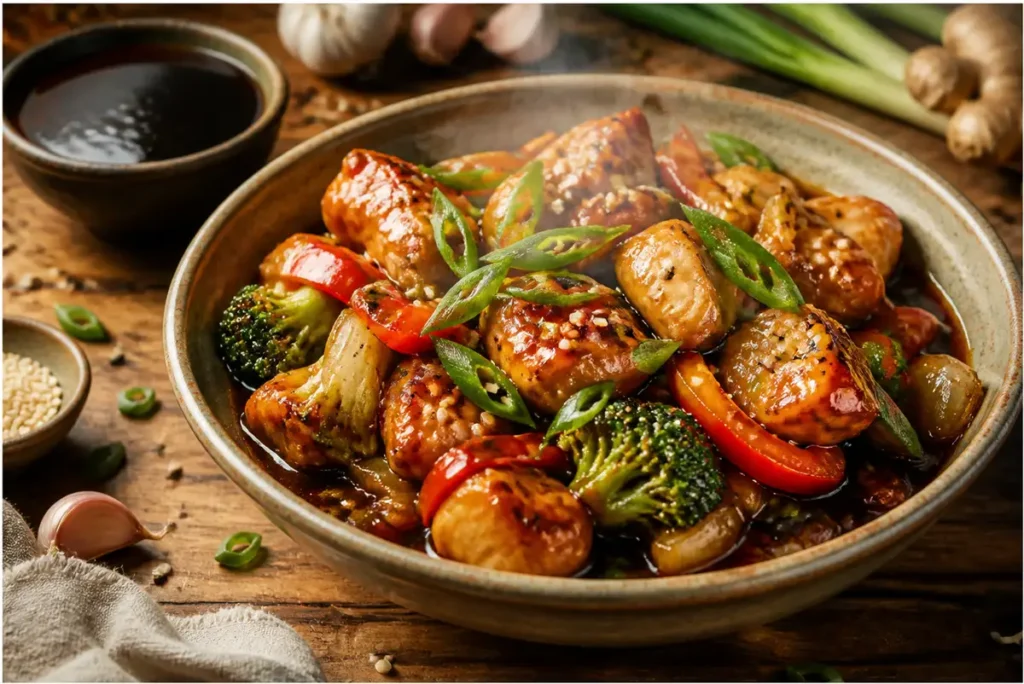
When dinner needs rescuing, a glossy homemade sauce can do more than almost anything else. This Teriyaki Sauce Recipe for Stir-Fries, Grilling, and Marinades gives chicken, vegetables, salmon, tofu, and rice that savory-sweet finish I crave, without the overly thick texture or one-note sweetness I often find in bottled sauces.
I make this easy teriyaki sauce recipe with pantry staples, fresh garlic, and ginger. It takes only a few minutes to simmer, and you can adjust the sweetness, saltiness, and thickness to suit the meal in front of you. Once you taste it warm from the saucepan, you may find yourself licking the spoon before dinner even reaches the table.
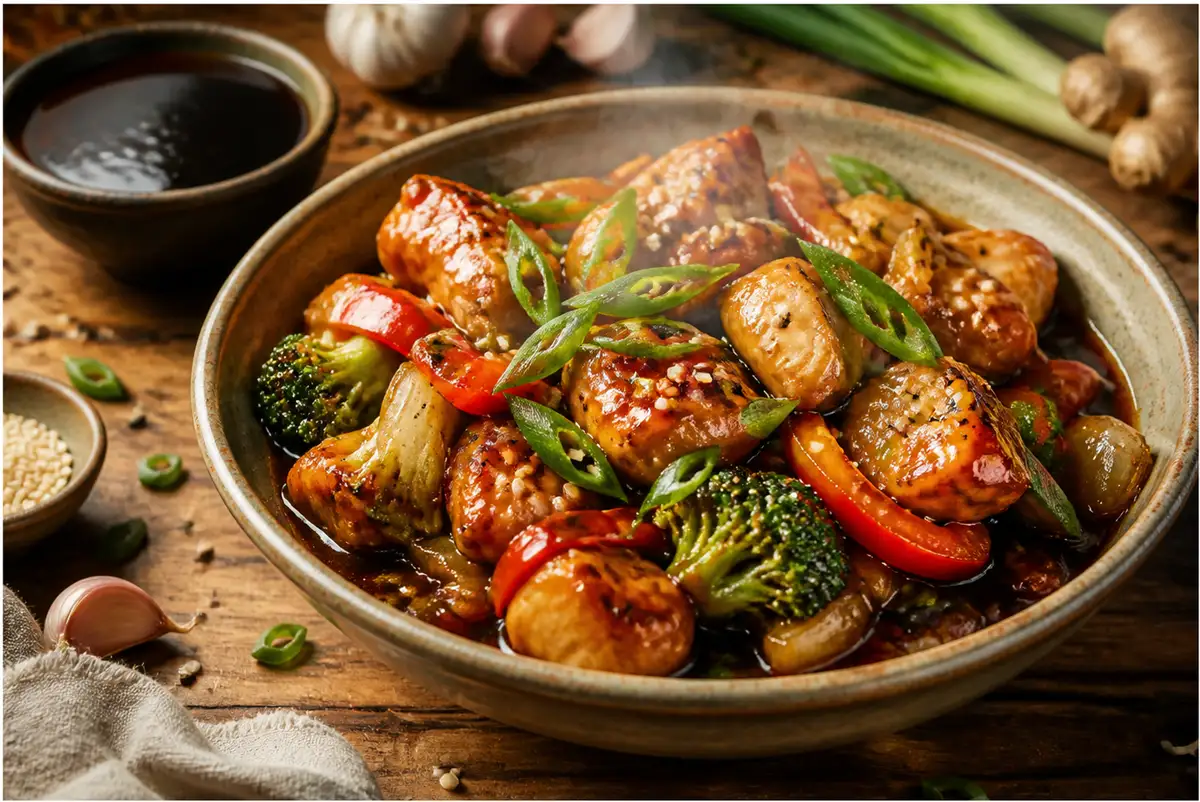
Table of Contents
- Why This Sauce Deserves a Permanent Spot in Your Kitchen
- What Makes This Teriyaki Sauce Recipe for Stir-Fries, Grilling, and Marinades Special?
- Ingredients You’ll Need for This Homemade Teriyaki Sauce
- Making Teriyaki Sauce Recipe for Stir-Fries, Grilling, and Marinades From Scratch
- Small Details That Make a Big Flavor Difference
- Variations and Smart Substitutions for Every Kitchen
- How to Serve Teriyaki Sauce Recipe for Stir-Fries, Grilling, and Marinades for Maximum Impact
- How to Store and Freeze This Sauce
- Frequently Asked Questions
- Make This Sauce Once, Then Keep It in Rotation
Why This Sauce Deserves a Permanent Spot in Your Kitchen
- It comes together in under 15 minutes with simple pantry-friendly ingredients.
- This homemade teriyaki sauce works as a stir-fry sauce, glaze, dipping sauce, and teriyaki marinade recipe.
- You can make it ahead and keep it ready for quick weeknight meals.
- It delivers bold, restaurant-style flavor without fancy equipment or complicated techniques.
What Makes This Teriyaki Sauce Recipe for Stir-Fries, Grilling, and Marinades Special?
The balance makes this sauce stand out. Soy sauce brings deep umami, brown sugar adds caramel-like sweetness, rice vinegar brightens the flavor, and fresh garlic and ginger keep every bite lively. A small amount of cornstarch gives the sauce a glossy coating without turning it into a sticky paste.
Traditional teriyaki has a long history in Japanese cooking, and the name refers to the shiny glaze created by the sauce. You can learn more about that background from Japan Travel: Teriyaki. My version is designed for everyday cooking, so it stays flexible enough for stir-fries, grilled foods, marinades, and dipping.
Ingredients You’ll Need for This Homemade Teriyaki Sauce
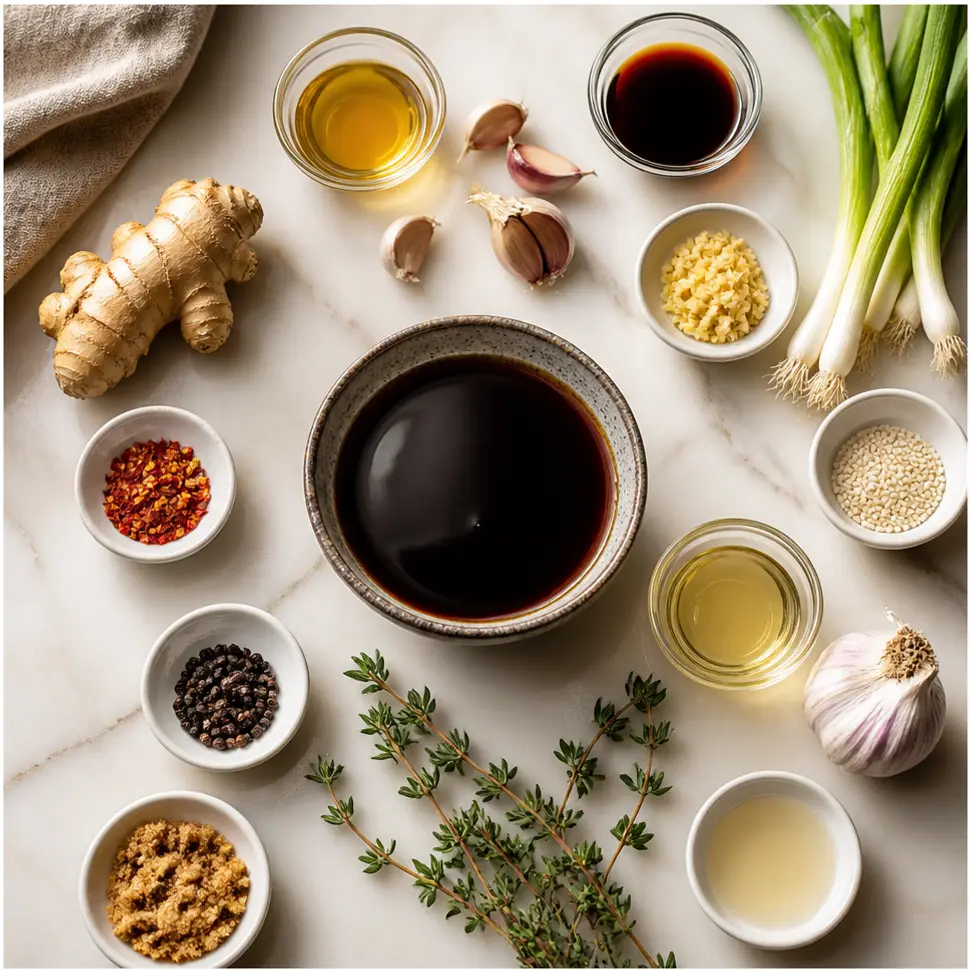
You’ll need only a handful of ingredients, but each one earns its place. Measure everything before you start because the sauce thickens quickly once it begins to simmer.
- 1/2 cup low-sodium soy sauce: This supplies the salty, savory base. Use tamari for a gluten-free version.
- 1/2 cup water: Water softens the soy sauce and gives the mixture room to reduce.
- 1/4 cup packed light brown sugar: Brown sugar adds sweetness and a gentle molasses note. Use honey or maple syrup if preferred.
- 2 tablespoons rice vinegar: Its mild acidity keeps the sauce from tasting heavy. Apple cider vinegar works in a pinch, though the flavor will be sharper.
- 1 tablespoon toasted sesame oil: This adds a nutty finish. Regular sesame oil is fine, but toasted oil gives more character.
- 2 garlic cloves, finely minced: Fresh garlic adds savory warmth.
- 1 teaspoon freshly grated ginger: Ginger gives the sauce a clean, peppery brightness. Use 1/2 teaspoon ground ginger if fresh isn’t available.
- 1 tablespoon cornstarch: This thickens the sauce into a smooth glaze. Replace it with 2 teaspoons arrowroot powder if needed.
- 2 tablespoons cold water: Mix this with the cornstarch to create a smooth slurry.
- 1/2 teaspoon toasted sesame seeds, optional: Sprinkle them in for texture and a subtle roasted flavor.
Making Teriyaki Sauce Recipe for Stir-Fries, Grilling, and Marinades From Scratch
- Whisk the soy sauce, 1/2 cup water, brown sugar, rice vinegar, sesame oil, garlic, and ginger in a small saucepan. Stir until the sugar begins to loosen into the liquid.
- Warm the mixture over medium heat until it reaches a gentle simmer. Don’t boil it aggressively, because rapid boiling can make the sauce reduce too fast and taste overly salty.
- Stir the cornstarch and 2 tablespoons cold water in a small bowl until no white lumps remain. Always use cold water for the slurry, or the cornstarch can clump before it blends into the sauce.
- Pour the slurry slowly into the simmering sauce while whisking continuously. The liquid should begin to look glossy within 30 to 60 seconds.
- Simmer the sauce for 1 to 2 minutes, whisking often. Stop when it coats the back of a spoon but still flows easily. It will thicken a little more as it cools.
- Taste the sauce carefully after removing it from the heat. Add a splash of water if it tastes too intense, another teaspoon of rice vinegar if it needs brightness, or a small spoonful of brown sugar if you prefer a sweeter glaze.
- Cool the sauce for several minutes before using it as a dipping sauce or marinade. For a smoother finish, strain out the garlic and ginger, although I usually leave them in for extra flavor.
For stir-fries, add about 1/3 cup of sauce to 1 pound of cooked protein and 4 cups of vegetables. Toss everything over medium-high heat until the sauce clings to the ingredients. If you enjoy building sauces for quick skillet meals, keep this stir fry sauce recipe in your dinner rotation too.
Small Details That Make a Big Flavor Difference
- Don’t over-reduce it: The sauce should coat a spoon, not sit in a thick lump. Remember that cooling increases the thickness.
- Use low-sodium soy sauce: You can always add salt, but you can’t easily remove it after the sauce becomes too salty.
- Fix the consistency easily: Whisk in warm water, 1 teaspoon at a time, if the sauce becomes too thick. If it stays thin, simmer it for another minute or prepare a half-batch of slurry.
- Add heat carefully: Stir in 1/4 teaspoon red pepper flakes, a little sriracha, or a thinly sliced chile for a spicy teriyaki sauce.
- Build more depth: Add 1 tablespoon mirin for extra sweetness and shine, or 1 teaspoon miso for a fuller savory flavor. Reduce the soy sauce slightly if you add miso.
- Keep the marinade separate: Never reuse marinade that has touched raw meat unless you boil it thoroughly first. For convenience, reserve a clean portion before marinating.
Variations and Smart Substitutions for Every Kitchen
- Gluten-free teriyaki: Replace soy sauce with certified gluten-free tamari or coconut aminos. Check every packaged ingredient if you need to avoid gluten strictly.
- Vegan version: Use soy sauce or tamari and maple syrup instead of honey. The base recipe is naturally dairy-free.
- Spicy garlic version: Add 1 teaspoon chili-garlic sauce and an extra minced garlic clove for a punchier glaze.
- Citrus teriyaki: Replace 1 tablespoon of the water with orange juice and add 1 teaspoon orange zest. This tastes especially good with salmon and grilled chicken.
- Smoky grilling sauce: Add 1/2 teaspoon smoked paprika or 1 teaspoon toasted sesame seeds. Brush it on during the final minutes of grilling so the sugar doesn’t burn.
- Quick shortcut: Use 1/2 teaspoon garlic powder and 1/4 teaspoon ground ginger when fresh aromatics aren’t available. The sauce will still taste good, though fresh ingredients give it a brighter finish.
If you like creamy, spicy condiments alongside grilled foods, my bang bang sauce recipe makes a fun contrast with the sweet-savory flavor of teriyaki.
How to Serve Teriyaki Sauce Recipe for Stir-Fries, Grilling, and Marinades for Maximum Impact
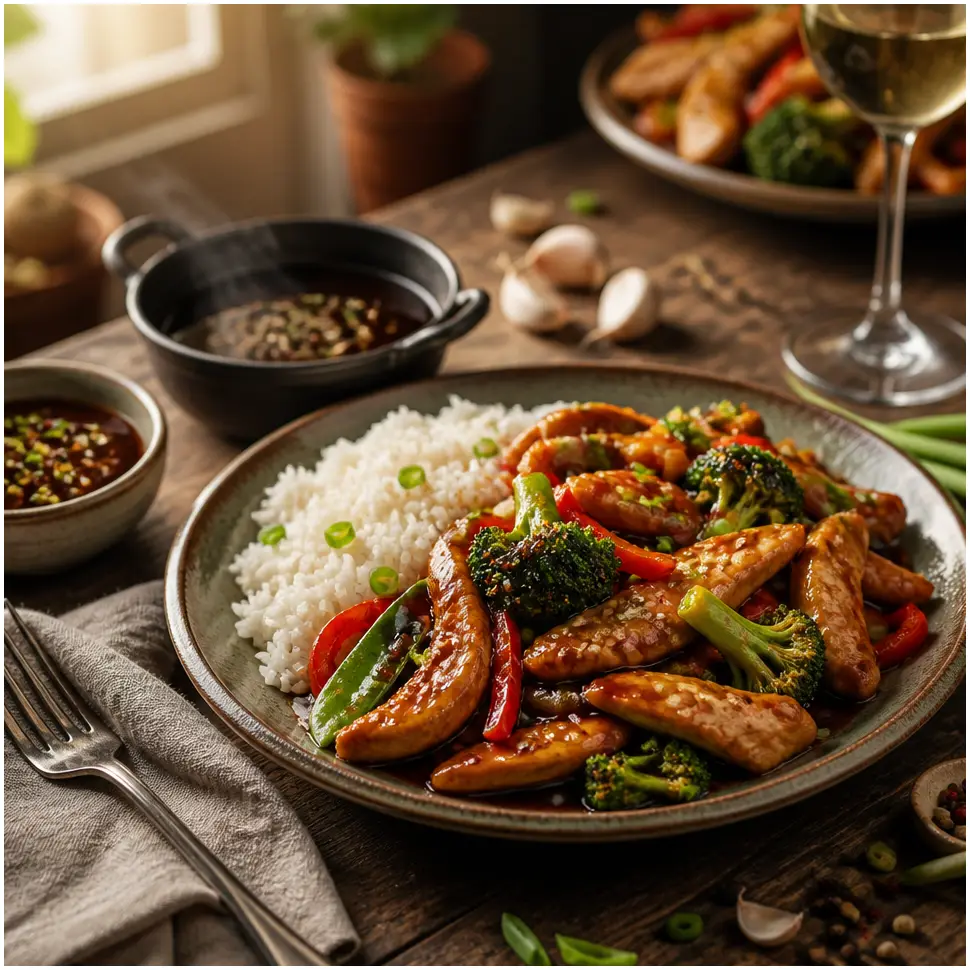
- Make chicken teriyaki bowls: Spoon the sauce over steamed rice with grilled chicken, broccoli, shredded carrots, and sliced green onions.
- Glaze grilled foods: Brush it over chicken thighs, shrimp, salmon, or tofu during the last few minutes of cooking. Add a final light brush just before serving for shine.
- Finish a vegetable stir-fry: Toss the sauce with bell peppers, snap peas, mushrooms, and cabbage, then top with sesame seeds and scallions.
- Serve it for dipping: Pour warm sauce into small bowls with dumplings, chicken skewers, roasted vegetables, or crispy tofu.
For a meal-prep dinner, cook the protein and vegetables separately, then add the sauce just before serving. That keeps the vegetables crisp instead of letting them soften in the container all week.
How to Store and Freeze This Sauce
Transfer cooled sauce to a clean airtight jar and refrigerate it for up to 7 days. Label the jar with the date, especially if you make several homemade grilling sauces at once.
You can freeze teriyaki sauce for up to 3 months in a freezer-safe container or ice cube tray. Leave room for expansion, thaw it overnight in the refrigerator, and whisk it well before reheating. Warm it gently in a saucepan or microwave, adding a teaspoon or two of water if the texture seems too thick.
For food safety, refrigerate cooked dishes promptly and reheat leftovers until they are steaming hot throughout. The USDA recommends reheating leftovers to 165°F, so use a food thermometer when you’re warming chicken, meat, or seafood.
This sauce takes 5 minutes to prep, 8 minutes to cook, yields about 1 1/4 cups, and is easy enough for beginner cooks.
Frequently Asked Questions
Use tamari for a gluten-free teriyaki sauce or coconut aminos for a soy-free option. Coconut aminos taste sweeter and less salty, so add seasoning gradually.
How long does homemade teriyaki sauce last in the fridge?Homemade teriyaki sauce lasts up to 7 days in an airtight container in the refrigerator. Cool it before sealing and use a clean spoon each time.
Can you freeze homemade teriyaki sauce?Yes, you can freeze teriyaki sauce for up to 3 months. Thaw it in the refrigerator and whisk it while reheating to restore a smooth texture.
Is teriyaki sauce vegan and dairy-free?This teriyaki sauce is dairy-free and can be vegan when you use brown sugar or maple syrup instead of honey. Check your soy sauce and other packaged ingredients for any added animal-derived ingredients.
Why is my teriyaki sauce too thick?Your sauce is usually too thick because it reduced too long or received too much cornstarch. Whisk in warm water, 1 teaspoon at a time, until it flows smoothly again.
How can I make teriyaki sauce ahead of time?Make the sauce up to 7 days ahead and refrigerate it in a sealed jar. Rewarm it gently before serving and loosen it with water if needed.
Does teriyaki sauce need to be reheated before serving?Teriyaki sauce can be served warm, at room temperature, or chilled depending on the dish. Warm it gently for glazing and stir-fries, but avoid prolonged boiling because the sauce can become too thick and salty.
When should I add teriyaki sauce to a stir-fry?Add teriyaki sauce during the final 1 to 2 minutes of stir-frying. This gives it enough time to coat the ingredients without burning the sugar or making the vegetables soggy.
Make This Sauce Once, Then Keep It in Rotation
This teriyaki sauce has become one of my favorite ways to make an ordinary dinner feel planned and generous. It turns a plain bowl of rice into a complete meal, gives grilled chicken a beautiful glaze, and makes vegetables much easier to get excited about.
Try it with your favorite protein or make the vegan version with tofu and mushrooms. If you make it, leave a comment or rate the recipe, save it for your next busy weeknight, and share it on Pinterest so you always have this homemade teriyaki sauce close at hand.