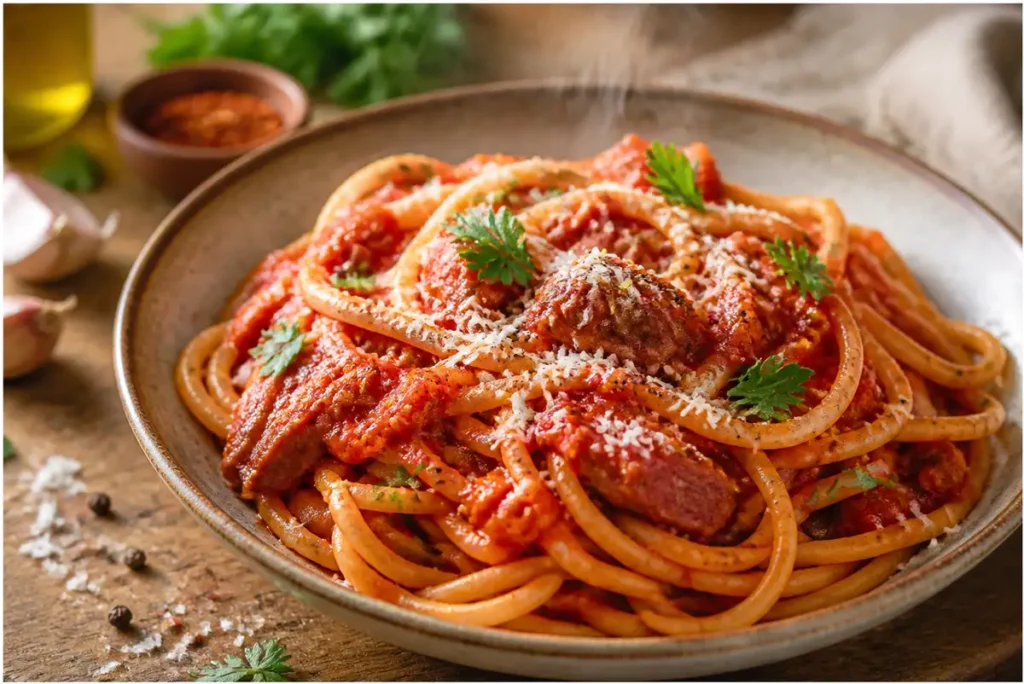
I’ve made plenty of bland pasta dinners, usually while insisting the sauce only needed “a little more something.” Then I discovered how much flavor comes from patiently sizzling cured pork, chili, and tomatoes together. This Amatriciana Sauce Recipe for Classic Italian Pasta delivers that something in one skillet.
The sauce tastes bold, savory, lightly spicy, and wonderfully rustic. Guanciale is traditional, but pancetta works beautifully for an easy weeknight version. Toss it with bucatini or spaghetti, add a shower of Pecorino Romano, and you’ll have a classic Italian pasta sauce that tastes far better than anything from a jar.
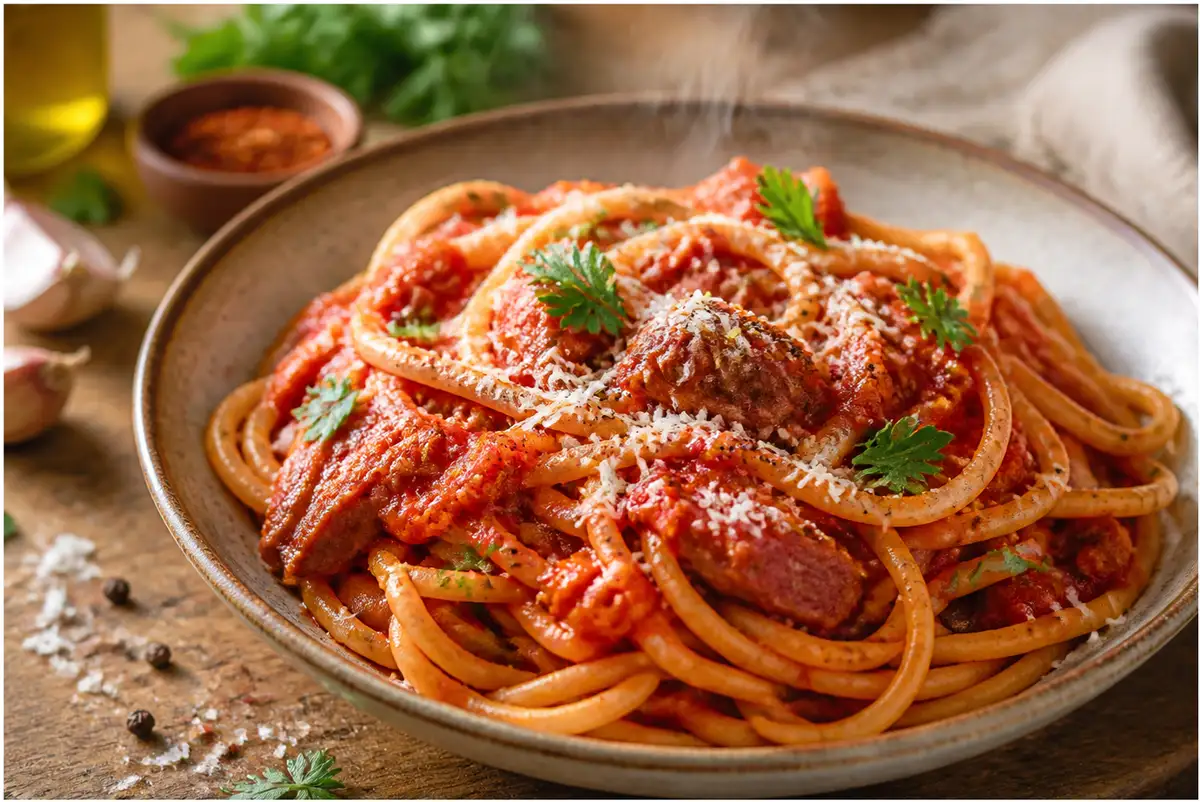
Table of Contents
Why This Amatriciana Sauce Recipe Earns a Spot in Your Kitchen
- Simple pantry ingredients: Canned tomatoes, cured pork, chili, and cheese create deep flavor without a long shopping list.
- Bold restaurant-style flavor: The rendered pork fat gives the tomato sauce a rich, savory backbone.
- Beginner-friendly: You’ll need one skillet, a pot for pasta, and no fancy equipment.
- Versatile and make-ahead friendly: Serve it with pasta, spoon it over roasted vegetables, or freeze the sauce for another dinner.
What Makes This Traditional Amatriciana Pasta So Special
Authentic amatriciana starts with guanciale, tomatoes, chili, and Pecorino Romano. The guanciale slowly releases fragrant fat, which carries the heat and seasons every tomato. I use a small amount of onion in my home kitchen for sweetness, although purists may leave it out.
The real trick is restraint. Don’t drown the tomatoes in herbs or garlic. Let the cured pork, bright tomato, and salty cheese stay in charge. Homemade sauce wins because you can control the chili, salt, and final texture, while a jar often tastes flat or overly sweet.
If you enjoy comparing Italian favorites, my classic bolognese pasta sauce offers a slower, meatier contrast to this quick Roman-style sauce.
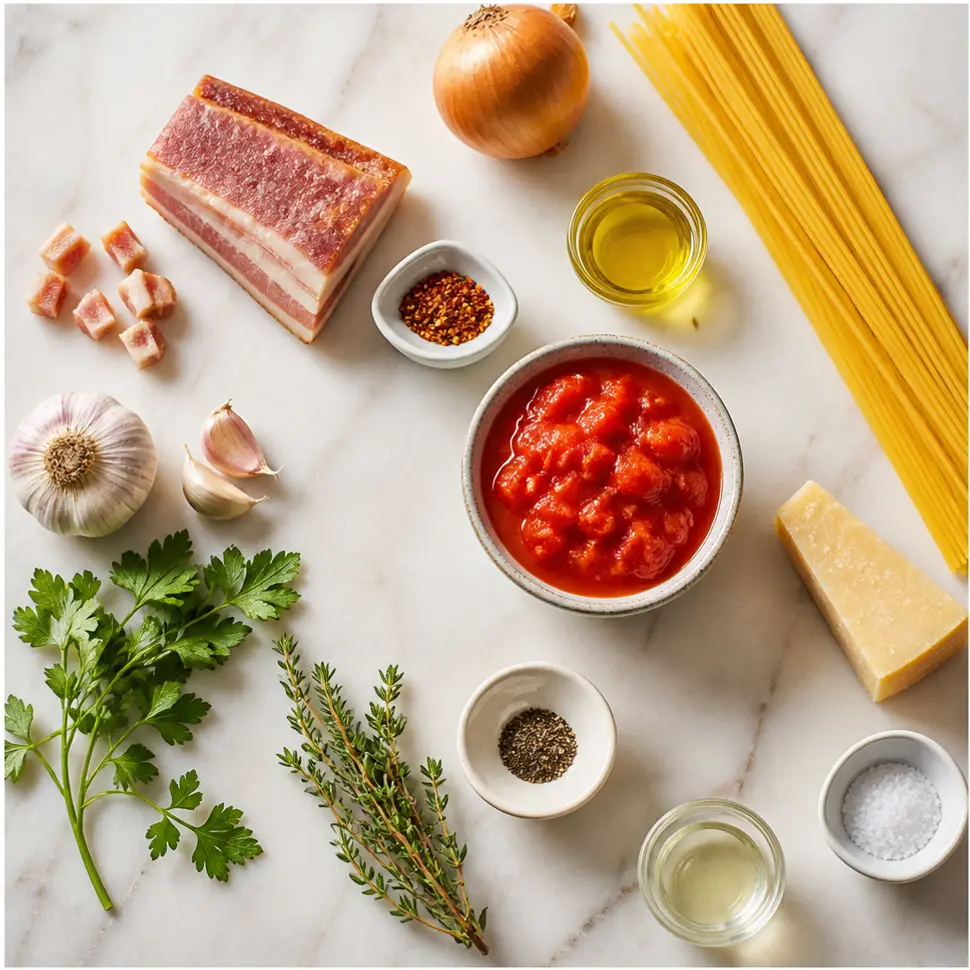
Ingredients You’ll Need for a Bold Italian Tomato Pancetta Sauce
Gather everything before you start. This sauce moves quickly once the pork hits the pan, and having the ingredients ready keeps the garlic-free tomato base from scorching.
- 4 ounces guanciale or pancetta, diced: Guanciale gives the most traditional flavor, while pancetta is easier to find. Thick-cut bacon works in a pinch, but it brings a smokier taste.
- 1 tablespoon extra-virgin olive oil: Use it only if your cured pork is lean. Guanciale usually releases enough fat on its own.
- 1/2 small yellow onion, finely chopped: Onion adds gentle sweetness and rounds out the tomatoes. Omit it for a stricter Roman-style sauce.
- 1/2 teaspoon red pepper flakes: This gives the sauce its familiar warmth. Use less for a mild version or more if you like a sharper kick.
- 1 can, 28 ounces, whole peeled tomatoes: San Marzano-style tomatoes provide a balanced, fruity base. Crush them by hand or with a wooden spoon.
- 1/2 teaspoon kosher salt, plus more for the pasta water: Start modestly because guanciale, pancetta, and Pecorino are already salty.
- 12 ounces bucatini or spaghetti: Bucatini holds the sauce inside its hollow center, while spaghetti gives you a classic, silky bite.
- 1/2 cup finely grated Pecorino Romano: The cheese adds salty richness and helps the sauce cling to the pasta.
- 2 tablespoons chopped fresh parsley, optional: Parsley adds color and a clean finish, although it isn’t essential to traditional amatriciana.
Making Amatriciana Sauce Recipe for Classic Italian Pasta From Scratch
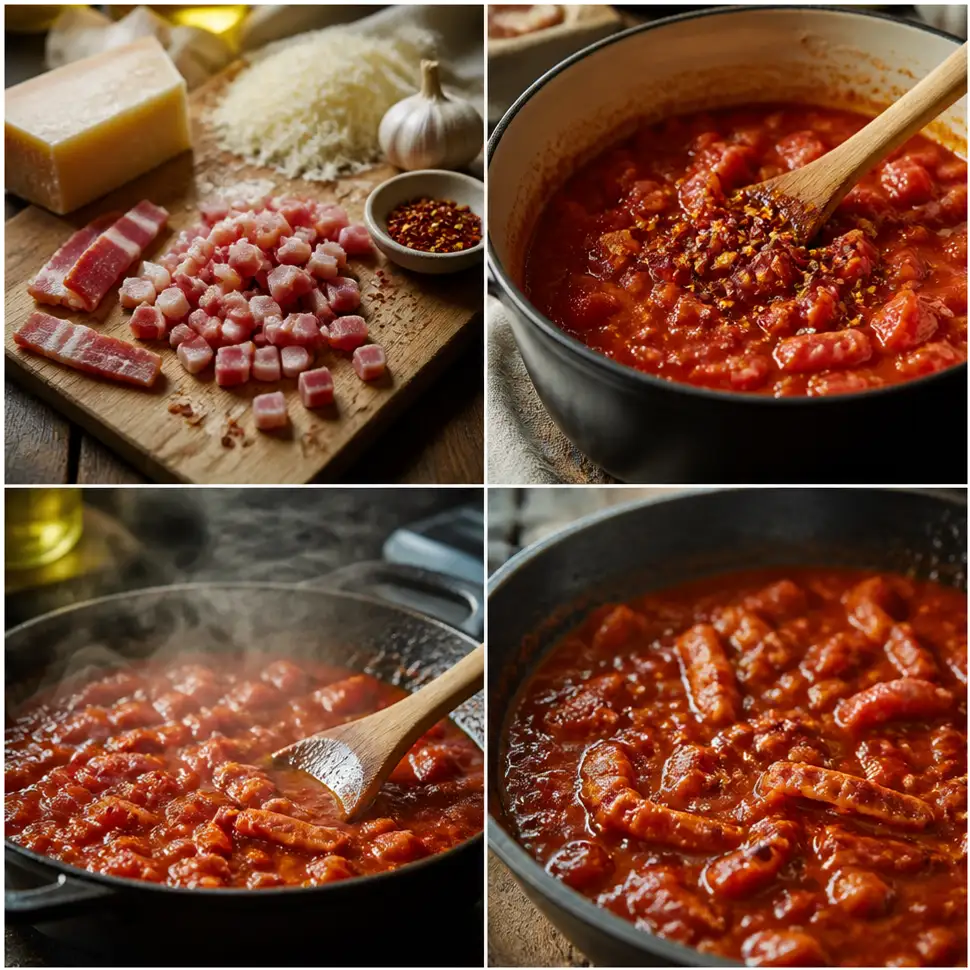
- Render the pork. Place the diced guanciale or pancetta in a cold, large skillet. Set the heat to medium and cook for 5 to 7 minutes, stirring occasionally, until the pieces turn golden and release a glossy layer of fat. The pork should smell savory and toasted, not burnt.
- Soften the onion. Transfer the crisp pork to a plate, leaving about 2 tablespoons of fat in the skillet. Add the onion and cook for 3 to 4 minutes, stirring until translucent and tender. If the pan looks dry, add the olive oil.
- Bloom the chili. Stir in the red pepper flakes and cook for 20 to 30 seconds. This short step wakes up the chili in the warm fat without giving it enough time to turn bitter.
- Add the tomatoes. Pour in the tomatoes and crush them with a wooden spoon. Stir in the salt, then bring the sauce to a gentle simmer. Scrape up any browned bits from the pan because they add extra depth.
- Simmer the sauce. Cook uncovered for 15 to 20 minutes, stirring every few minutes, until the tomatoes look thick, glossy, and slightly reduced. The sauce should coat a spoon but still flow easily. If it splatters, lower the heat rather than covering the skillet completely.
- Boil the pasta. While the sauce simmers, cook the bucatini or spaghetti in well-salted water until just shy of al dente. Reserve 1 cup of pasta water before draining. That starchy water is the secret to a sauce that clings instead of pooling at the bottom of the bowl.
- Combine the pasta and sauce. Return the drained pasta to the skillet and toss vigorously over low heat for 1 to 2 minutes. Add pasta water a tablespoon at a time until the sauce looks smooth and glossy. The noodles should be coated, not swimming.
- Finish with cheese. Turn off the heat and sprinkle in the Pecorino Romano, tossing continuously. Add the reserved pork and parsley, if using. Taste before adding more salt, then serve immediately while the sauce is silky.
Small Details That Make a Big Flavor Difference
- Start with a cold pan: Cold-rendering the pork melts the fat gradually and keeps the pieces crisp rather than rubbery.
- Don’t rush the tomato simmer: Fifteen minutes is enough for a quick sauce, but the flavor improves as the raw tomato edge softens.
- Reserve pasta water: If the sauce feels too thick, loosen it with warm pasta water. If it feels thin, toss it with the pasta for another minute before adjusting.
- Watch the salt: Taste after adding the Pecorino. I’ve over-salted this sauce before, and there’s no graceful rescue once the cheese goes in.
- Keep the heat gentle: High heat can make the tomatoes taste harsh and cause the cheese to clump. Low heat gives you a smoother finish.
- Use quality tomatoes: Since this recipe has only a few main ingredients, flavorful canned tomatoes make a noticeable difference.
Variations and Smart Substitutions for Easy Amatriciana Sauce
- Guanciale-free version: Replace guanciale with pancetta for a balanced, traditional-style result. Thick-cut bacon works when needed, but drain excess smoky fat if the sauce tastes heavy.
- Milder sauce: Reduce the red pepper flakes to a pinch, or leave them out for a family-friendly tomato pasta.
- Extra-spicy version: Add another 1/4 teaspoon of chili flakes or finish with a little Calabrian chili paste.
- Dairy-free option: Omit the Pecorino and finish with a tablespoon of nutritional yeast or toasted breadcrumbs. The sauce remains rich from the rendered pork.
- Gluten-free option: Use certified gluten-free spaghetti or bucatini and check the labels on your cured pork and canned tomatoes.
- Meatless variation: Sauté finely chopped mushrooms with smoked paprika and olive oil in place of the pork. It won’t be traditional amatriciana, but it creates a satisfying smoky tomato sauce.
For a completely different Roman pasta experience, try pairing the same careful pasta-water technique with my creamy cacio e pepe sauce. It has no tomato or pork, but it teaches the same lesson: simple ingredients need good timing.
How to Serve Amatriciana Sauce Recipe for Classic Italian Pasta at Its Best
- Choose bucatini: Its hollow shape catches the tomato sauce and gives every bite a satisfying, saucy center. Spaghetti, rigatoni, and mezze maniche also work well.
- Finish generously: Add Pecorino Romano, a few crisp pieces of guanciale, and a pinch of chili flakes at the table.
- Build a complete dinner: Serve the pasta with a sharp green salad and roasted broccoli to balance the rich sauce.
- Serve it for guests: Keep the sauce warm separately and toss it with freshly cooked pasta just before dinner. That keeps the noodles glossy instead of soft.
How to Store and Freeze This Pasta Sauce
Cool the sauce within 2 hours, then refrigerate it in a shallow, airtight container for up to 4 days. Store the pasta separately whenever possible because noodles continue absorbing sauce and become soft overnight. For safe cooling and reheating practices, follow guidance from the USDA Food Safety and Inspection Service.
Freeze the cooled sauce for up to 3 months in freezer-safe containers, leaving a little room for expansion. Thaw it overnight in the refrigerator, then reheat it gently in a skillet with a splash of water. Stir in freshly grated Pecorino after reheating rather than freezing the cheese in the sauce, which can make the texture grainy.
This sauce takes 10 minutes to prep, 25 minutes to cook, serves 4, and is an easy recipe for beginner cooks.
Print
Amatriciana Sauce Recipe for Classic Italian Pasta
- Total Time: 35 minutes
- Yield: 4 1x
Description
A bold, savory Roman-style tomato sauce with cured pork, chili, Pecorino Romano, and pasta.
Ingredients
- 4 ounces guanciale or pancetta, diced
- 1 tablespoon extra-virgin olive oil
- 1/2 small yellow onion, finely chopped
- 1/2 teaspoon red pepper flakes
- 1 can (28 ounces) whole peeled tomatoes
- 1/2 teaspoon kosher salt, plus more for the pasta water
- 12 ounces bucatini or spaghetti
- 1/2 cup finely grated Pecorino Romano
- 2 tablespoons chopped fresh parsley, optional
Instructions
- Place diced guanciale or pancetta in a cold skillet and cook over medium heat for 5 to 7 minutes.
- Transfer crisp pork to a plate, leaving about 2 tablespoons fat in the skillet.
- Cook onion for 3 to 4 minutes until translucent, adding olive oil if needed.
- Stir in red pepper flakes and cook for 20 to 30 seconds.
- Add tomatoes, crush them, stir in salt, and bring to a gentle simmer.
- Simmer uncovered for 15 to 20 minutes until thick, glossy, and slightly reduced.
- Cook pasta in salted water until just shy of al dente.
- Reserve 1 cup pasta water, then drain the pasta.
- Toss pasta with sauce over low heat for 1 to 2 minutes.
- Add pasta water gradually until the sauce becomes smooth and glossy.
- Turn off heat and toss in Pecorino Romano.
- Add reserved pork and parsley, if using, then serve immediately.
Notes
Use a cold pan to render the cured pork gradually and keep it crisp.
Reserve pasta water to loosen and emulsify the sauce.
Taste for salt only after adding the Pecorino Romano.
- Prep Time: 10 minutes
- Cook Time: 25 minutes
- Cuisine: Italian
Frequently Asked Questions
Use pancetta as the best substitute for guanciale in amatriciana sauce. Thick-cut bacon also works, but it creates a smokier flavor and may require draining some excess fat.
How long does homemade amatriciana sauce last in the fridge?Homemade amatriciana sauce lasts up to 4 days in the refrigerator when stored in an airtight container. Cool it promptly and keep cooked pasta separate for the best texture.
Can you freeze amatriciana sauce?Yes, you can freeze amatriciana sauce for up to 3 months. Thaw it in the refrigerator overnight and reheat it gently in a skillet with a splash of water.
Is amatriciana sauce gluten-free?Amatriciana sauce is naturally gluten-free when its individual ingredients are gluten-free. Serve it with certified gluten-free pasta and check cured pork labels for any added ingredients.
Can amatriciana sauce be made dairy-free?Yes, make it dairy-free by omitting Pecorino Romano and finishing the pasta with nutritional yeast or toasted breadcrumbs. The tomato and cured pork base still provides plenty of flavor.
Why is my amatriciana sauce too watery?Simmer the sauce uncovered for a few more minutes to reduce excess liquid. Tossing it with hot pasta also helps the sauce thicken because the noodles release starch.
How do you reheat amatriciana sauce without drying it out?Reheat amatriciana sauce over low heat with 1 to 2 tablespoons of water per serving. Stir often and add fresh Pecorino only after the sauce is hot and smooth.
When should I add Pecorino Romano to amatriciana sauce?Add Pecorino Romano after turning off the heat and tossing the sauce with pasta. Direct high heat can cause the cheese to clump instead of melting into a silky coating.
A Roman-Style Pasta Dinner You’ll Make Again
This Amatriciana Sauce Recipe for Classic Italian Pasta proves that a short ingredient list can still produce a memorable dinner. Take your time rendering the pork, keep the tomato simmer gentle, and save that pasta water. Those small steps make the sauce glossy, balanced, and full of character.
If you make it, leave a comment and rate the recipe so I can hear how it turned out in your kitchen. Save it for your next easy Italian dinner, and share it on Pinterest when you’re ready to pass along a bowl of saucy comfort.