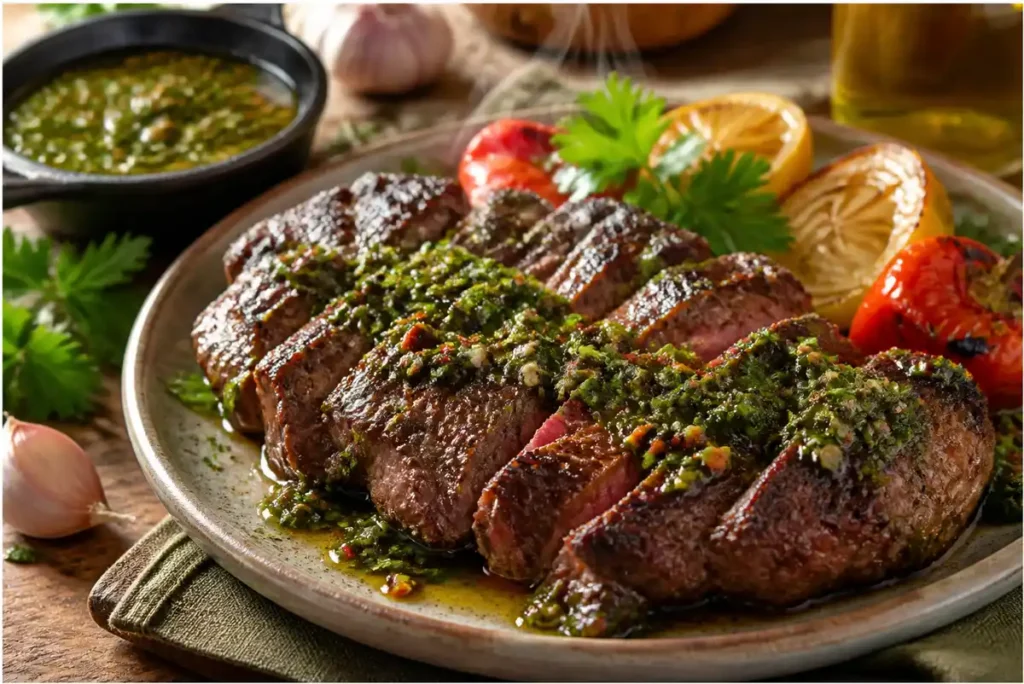
When a platter of grilled steak needs something bright, garlicky, and fresh, I reach for Chimichurri Sauce for BBQ: A Fresh Grilled Meat Topping. This vivid green sauce takes only minutes to mix, yet it can rescue a dry chicken breast, wake up smoky vegetables, and make a simple steak feel like a backyard feast.
My favorite part is the contrast. Charred meat brings deep, savory flavor, while parsley, vinegar, garlic, and olive oil cut through the richness with a lively finish. It’s not a heavy BBQ sauce or a sugary glaze. It’s a fresh herb sauce for grilled meat that keeps every bite tasting balanced.
I’ve made chimichurri too salty, too oily, and once so garlicky that the whole kitchen smelled like a dare. The version below has a dependable ratio, plenty of texture, and enough flexibility for whatever you’re grilling.
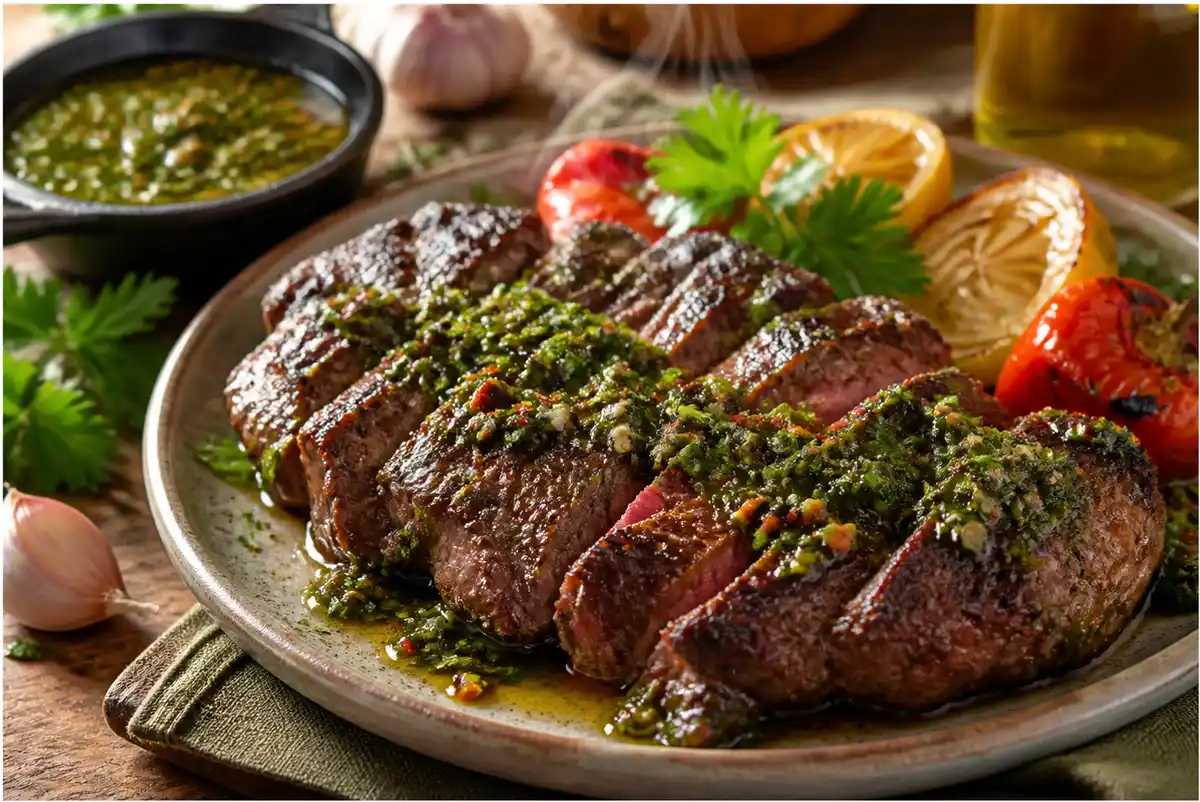
Table of Contents
- Why This Fresh Sauce Deserves a Permanent Spot by the Grill
- What Gives This Chimichurri Its Bright, Bold Personality?
- Ingredients for a Fresh Herb Sauce for Grilled Meat
- Making Chimichurri Sauce for BBQ: A Fresh Grilled Meat Topping From Scratch
- Small Details That Make a Big Flavor Difference
- Easy Variations and Smart Substitutions
- How to Serve Chimichurri Sauce for BBQ: A Fresh Grilled Meat Topping
- How to Store and Freeze This Herb-Filled Sauce
- Frequently Asked Questions
- A Fresh Finish I Make Every Grilling Season
Why This Fresh Sauce Deserves a Permanent Spot by the Grill
- It’s a no-cook sauce ready in about 15 minutes.
- Simple pantry-friendly ingredients create bold, restaurant-style flavor.
- It’s naturally vegan, dairy-free, and gluten-free.
- It works as a grilled meat sauce, vegetable topping, marinade, or dipping sauce.
What Gives This Chimichurri Its Bright, Bold Personality?
Flat-leaf parsley provides the clean herbal base, while cilantro adds a softer, citrusy note. Garlic brings savory punch, red wine vinegar supplies the sharp edge, and olive oil rounds everything out. Red pepper flakes add gentle heat without taking over.
The key technique is chopping instead of fully blending. A food processor can turn the herbs into a smooth paste and make the sauce look muddy. Hand-chopped herbs create the loose, spoonable texture that makes homemade chimichurri feel fresh. The homemade version also tastes more vibrant than a jarred sauce because you can adjust the vinegar, salt, garlic, and heat before serving.
For a little background on the sauce’s Argentine roots, I like this reference from Argentina.gob.ar: Chimichurri, which also highlights its traditional connection to grilled foods.
Ingredients for a Fresh Herb Sauce for Grilled Meat
You’ll need just a handful of ingredients. Use the freshest herbs you can find, and let the sauce rest briefly so the garlic and vinegar can mingle instead of tasting like separate ingredients.
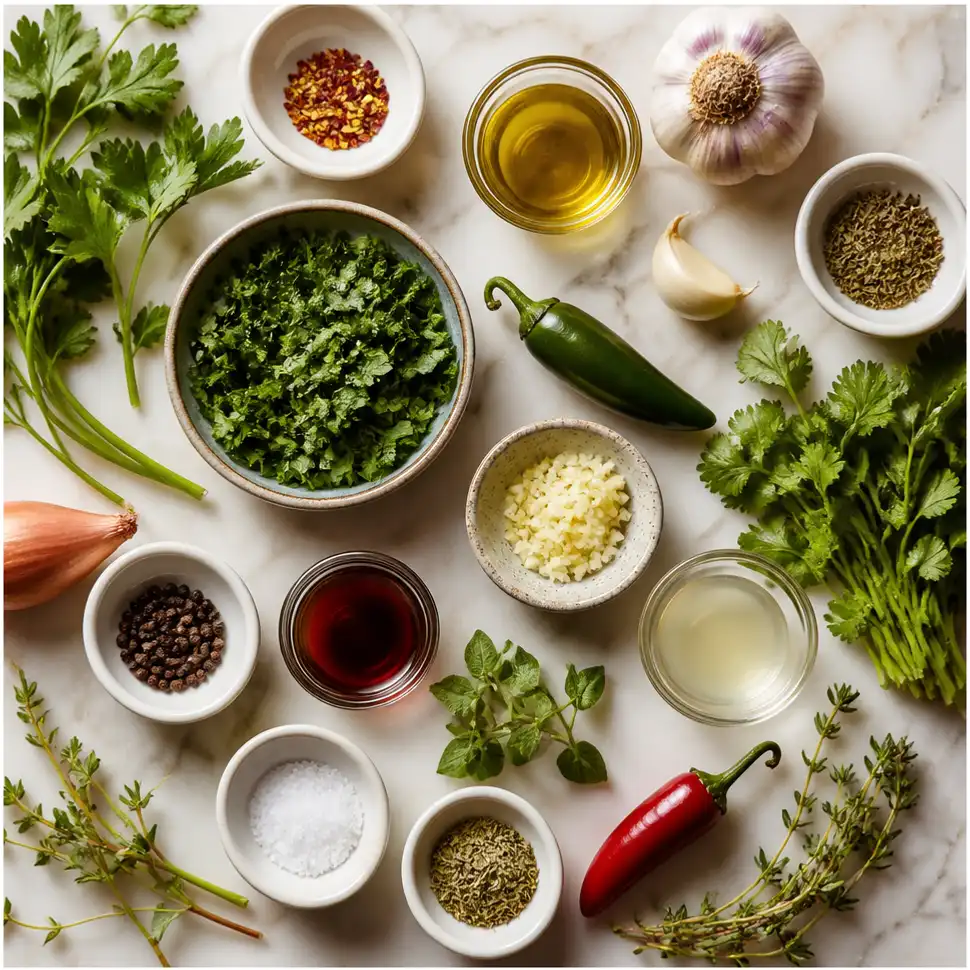
- 1 cup packed flat-leaf parsley leaves: The main herbal foundation. Remove thick stems, which can make the sauce fibrous.
- 1/2 cup fresh cilantro leaves: Adds citrusy depth. Replace it with more parsley if you dislike cilantro.
- 4 garlic cloves, finely minced: Delivers the signature savory bite. Use 3 cloves for a gentler sauce.
- 1/3 cup extra-virgin olive oil: Creates a glossy, spoonable texture. Use a mild olive oil if your extra-virgin variety tastes bitter.
- 3 tablespoons red wine vinegar: Brings acidity and keeps the sauce lively. Sherry vinegar works well as a substitute.
- 1 tablespoon finely minced shallot: Adds mild onion flavor and a little texture. Red onion can stand in, but mince it very finely.
- 1/2 teaspoon dried oregano: Gives the sauce a warm, earthy note associated with classic Argentinian chimichurri sauce.
- 1/2 teaspoon red pepper flakes: Adds moderate heat. Reduce to 1/4 teaspoon for a mild version.
- 3/4 teaspoon kosher salt: Sharpens the herbs and balances the vinegar.
- 1/4 teaspoon freshly ground black pepper: Adds a subtle peppery finish.
Making Chimichurri Sauce for BBQ: A Fresh Grilled Meat Topping From Scratch
- Wash the parsley and cilantro under cool water, then dry them thoroughly. Excess water will dilute the sauce, so spin the herbs in a salad spinner or pat them dry with clean towels.
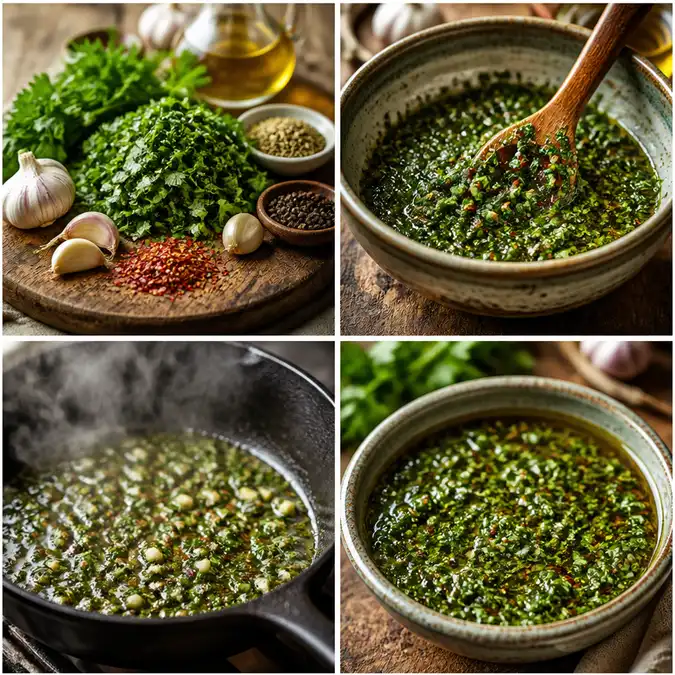
- Chop the herbs by hand until they look fine but still textured. You should see tiny green flecks rather than a smooth paste. A sharp chef’s knife makes this quick and prevents bruised, dark herbs.
- Mince the garlic and shallot as finely as possible. Large garlic pieces can deliver an unpleasant burst, while fine pieces spread the flavor evenly through every spoonful.
- Stir the olive oil, red wine vinegar, oregano, red pepper flakes, salt, and black pepper together in a medium bowl. The mixture should look loose and lightly cloudy.
- Fold in the chopped herbs, garlic, and shallot. Stir gently until every green fleck is coated. The finished sauce should be loose enough to drizzle but textured enough to sit on grilled meat.
- Taste the sauce after 5 minutes. Add a splash more vinegar for brightness, a pinch of salt for a flat flavor, or another tablespoon of olive oil if the acidity feels too sharp. Fresh herbs can vary in intensity, so tasting is part of the recipe.
- Rest the chimichurri at room temperature for 15 to 30 minutes before serving. The color should remain bright green, the aroma should smell fresh and garlicky, and the flavor should taste integrated rather than harsh.
- Spoon the sauce over grilled steak, chicken, pork, fish, or vegetables just before eating. Don’t cook the finished chimichurri over high heat, because the herbs will lose their fresh flavor and the garlic may turn bitter.
Small Details That Make a Big Flavor Difference
- Dry the herbs well: Water clinging to the leaves thins the sauce and prevents the olive oil from coating the herbs properly.
- Don’t overblend: A food processor can make the sauce pasty. If you use one, pulse briefly and stop while the herbs still have visible texture.
- Adjust the consistency: Add olive oil one teaspoon at a time if the sauce is too thick. Add vinegar by the teaspoon if it tastes heavy or oily.
- Let it rest, but don’t leave it out all day: A short rest improves flavor, while prolonged room-temperature storage creates a food-safety concern.
- Balance rich foods with extra acidity: For fatty ribeye or sausage, add another teaspoon of vinegar. For lean chicken, keep the original ratio or add a little more oil.
- Serve it cool or at room temperature: Very cold sauce tastes muted, while warm sauce can lose its fresh herbal character.
Easy Variations and Smart Substitutions
- Classic parsley version: Skip the cilantro and use 1 1/2 cups packed parsley for a more traditional, clean herbal profile.
- Extra-spicy chimichurri: Add one finely minced Fresno chile or a small jalapeño with the red pepper flakes.
- Smoky version: Replace half the red pepper flakes with 1/2 teaspoon smoked paprika for a deeper BBQ flavor.
- Citrus version: Replace 1 tablespoon of vinegar with fresh lemon juice and add 1 teaspoon of finely grated lemon zest.
- Minty variation: Replace 1/4 cup of cilantro with fresh mint, especially when serving the sauce with lamb or grilled vegetables.
- Quick weeknight shortcut: Use a small food processor and pulse the herbs, garlic, and shallot in short bursts. Stir in the oil and vinegar afterward so the mixture doesn’t become overly smooth.
If you’re planning several easy sauces for a cookout, this chimichurri pairs nicely with a sweeter glaze such as my Teriyaki sauce recipe. The contrast between fresh herbs and caramelized sweetness gives guests plenty of options.
How to Serve Chimichurri Sauce for BBQ: A Fresh Grilled Meat Topping
- Grilled steak: Spoon chimichurri over sliced flank steak, skirt steak, or ribeye after resting the meat. Add it at the table so everyone can choose the amount.
- Chicken and pork: Use it as a finishing sauce for grilled chicken thighs, pork chops, or tenderloin. The vinegar helps balance richer cuts.
- Vegetables and beans: Drizzle it over grilled zucchini, peppers, mushrooms, corn, roasted potatoes, or white beans for a satisfying meat-free plate.
- BBQ spread: Serve it in a small bowl beside grilled meats, warm bread, and a crisp salad. It also makes a lively alternative to bottled BBQ sauce for grilled steak.
For a larger meal, serve this grilled meat sauce alongside a second savory option such as my Stir fry sauce recipe, especially if leftover vegetables or rice are joining the menu.
[ SERVING_IMAGE ]How to Store and Freeze This Herb-Filled Sauce
Store chimichurri in an airtight glass jar in the refrigerator for up to 5 days. Press a piece of plastic wrap directly against the surface before sealing if you want to slow oxidation and protect the bright green color.
For longer storage, freeze the sauce in ice cube trays, then transfer the solid cubes to a freezer bag. Frozen chimichurri keeps its best flavor for about 3 months. Thaw the cubes overnight in the refrigerator or for a short time at room temperature, then stir in a teaspoon of olive oil or vinegar if the texture looks separated.
Make it several hours ahead for a barbecue, but keep it chilled until serving. Let only the portion you plan to use come toward room temperature, and refrigerate leftovers promptly. The United States Department of Agriculture recommends keeping perishable foods out of the temperature danger zone, so don’t leave the bowl sitting beside the grill for hours.
This sauce takes 15 minutes to prep, requires no cooking, yields about 1 1/2 cups, serves 8, and is easy enough for beginner cooks.
Frequently Asked Questions
Replace the cilantro with an equal amount of flat-leaf parsley. The sauce will taste cleaner and more traditional, with less citrusy herbal flavor.
How long does homemade chimichurri sauce last in the refrigerator?Homemade chimichurri lasts up to 5 days in an airtight container in the refrigerator. Its color and flavor are freshest during the first 2 days.
Can you freeze chimichurri sauce for BBQ?Yes, you can freeze chimichurri in ice cube trays for about 3 months. Thaw it in the refrigerator and stir it well before serving.
Is chimichurri sauce gluten-free and dairy-free?Yes, this recipe is naturally gluten-free and dairy-free. Check packaged spices and vinegar labels if you need to avoid cross-contact or additives.
How do I fix chimichurri sauce that is too oily?Add red wine vinegar one teaspoon at a time until the sauce tastes brighter and less heavy. A pinch of salt and a little extra chopped parsley can also restore balance.
Can I make chimichurri sauce ahead of time?Yes, you can make it up to 24 hours ahead and refrigerate it in a sealed jar. Let it stand briefly before serving, then stir to recombine the oil and vinegar.
Does chimichurri sauce need to be reheated?No, chimichurri should not be reheated because high heat dulls the herbs and can make the garlic bitter. Serve it cool or at room temperature over freshly grilled food.
Why does my chimichurri sauce taste too bitter?Bitter chimichurri usually comes from bruised herbs, a harsh olive oil, or overprocessing. Chop the herbs by hand, use a mild olive oil, and balance the sauce with a little more vinegar and salt.
A Fresh Finish I Make Every Grilling Season
This easy chimichurri sauce recipe is one of those small kitchen wins that makes dinner feel far more special than the effort suggests. Keep the herbs textured, taste before serving, and let the sauce brighten the smoky flavors instead of hiding them.
If you make it, leave a comment and rate the recipe so I can hear how you used it. Save it for your next cookout, and share it on Pinterest with anyone looking for steak topping ideas or fresh herb sauce for grilling.