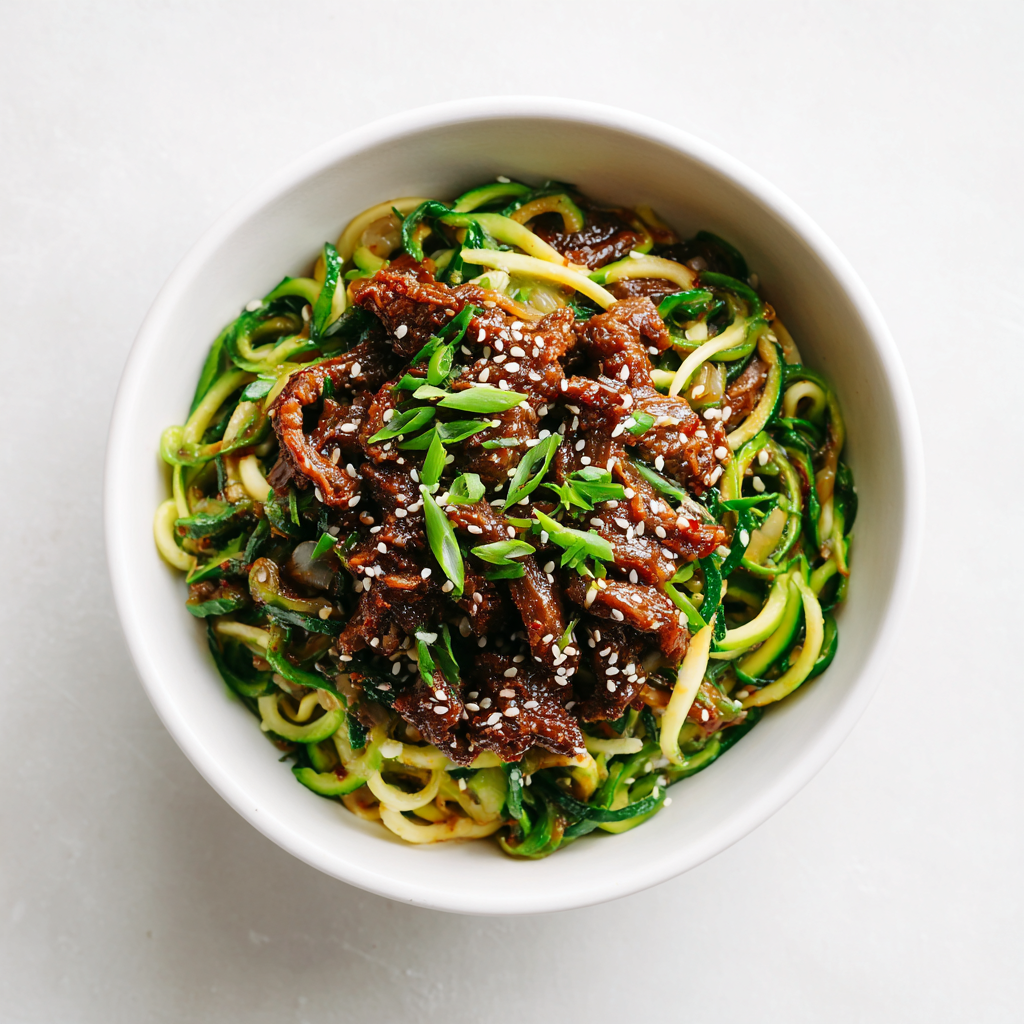
I first made Korean beef zucchini noodles on a Sunday night when takeout felt tempting but my jeans said otherwise. I had ground beef, soy sauce, garlic, and a few zucchini. Twenty minutes later, I was twirling spicy-sweet noodles that tasted like something from a Korean bistro only lighter, fresher, and guilt-free.
Since then, this dish has become one of my go-to meals whenever I want that irresistible bulgogi-style flavor without the carbs.
Why Korean Beef Zucchini Noodles Work So Well
The flavor layers that bring it to life
There’s something satisfying about the sweet-salty balance of Korean BBQ flavors mixed with the freshness of spiralized zucchini. This dish hits that comforting spot without leaving you heavy or bloated. The garlic, sesame oil, and gochujang (Korean red pepper paste) create bold flavor in every bite, while thin-sliced beef brings that satisfying chew you crave. Plus, zucchini noodles soak up just enough sauce to stay juicy but never soggy—if cooked right.
We often turn to this meal on nights when we want something that feels a bit indulgent but keeps things clean and light. It’s also fast. From prep to plate in under 30 minutes means even your busiest weeknight can still taste like a weekend treat.
Zoodles vs. noodles: the healthier noodle swap
Zucchini noodles also called zoodles are a smart alternative when you’re trying to cut carbs without sacrificing texture. Unlike rice noodles or wheat pasta, zoodles cook in just a minute or two and don’t spike your blood sugar. They pair especially well with bold marinades like bulgogi sauce because they don’t overpower the flavor.
The trick? Don’t overcook them. Toss them in at the very end or sauté separately for just 1–2 minutes to keep their bite. A spiralizer, julienne peeler, or mandolin can help you get even, firm strands. Want them even firmer? Sprinkle lightly with salt and let them rest for 10 minutes, then blot with a towel to draw out moisture.
If you’re looking for other recipes that use zucchini in creative ways, you might also love our Parmesan Zucchini Noodle Bake or this refreshing Zucchini Noodle Stir Fry.
Table of Contents
Why this combo works
Zucchini noodles absorb Korean-style sauces beautifully, holding onto every drop of garlic, soy, and sesame. Unlike heavier noodles, zoodles let those deep flavors shine without weighing you down just like our other low-carb favorites at Best Meals to Cook.
Ingredients & Kitchen Prep
Essential ingredients
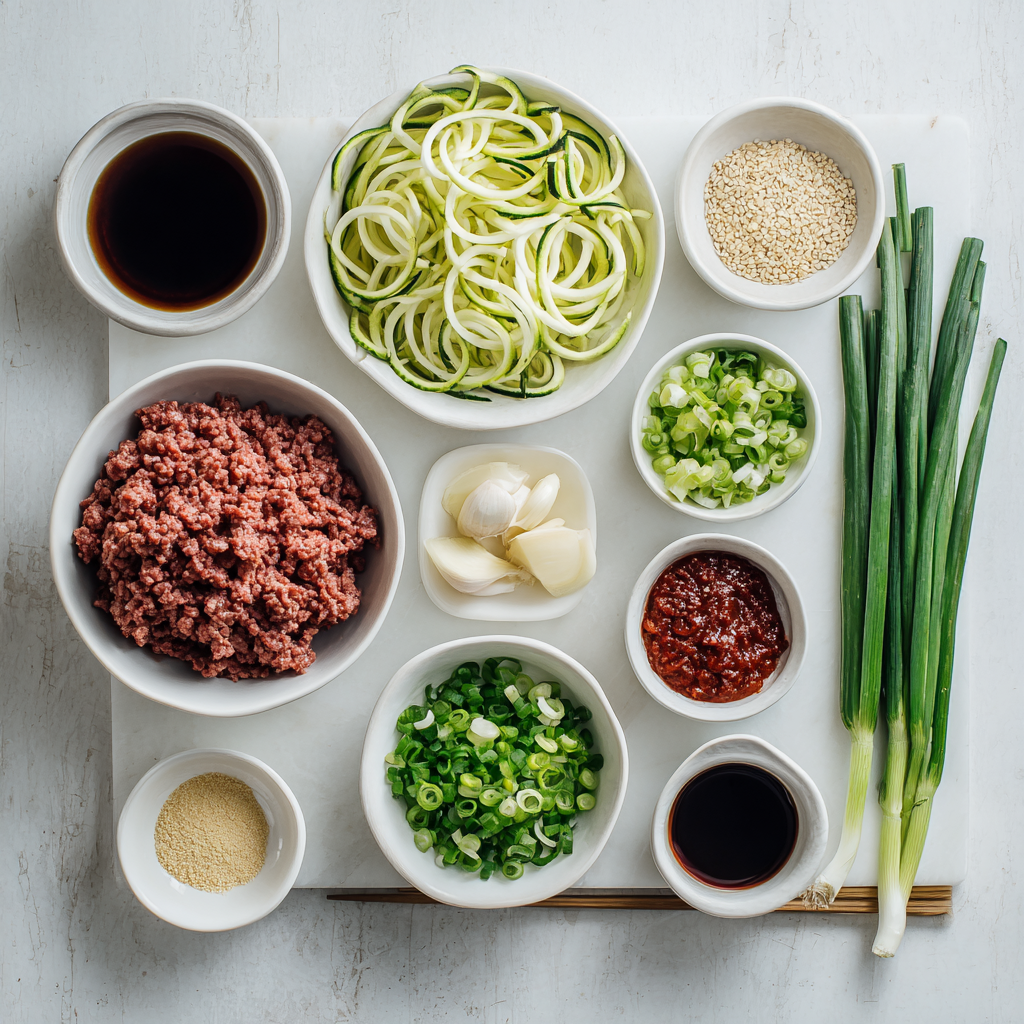
Here’s what you’ll need for a perfect batch of Korean beef zucchini noodles:
| Ingredient | Role in the Recipe |
|---|---|
| 1 lb ground beef | Main protein with rich flavor |
| 3 medium zucchini | Spiralized into noodles |
| 2 tbsp soy sauce (or tamari) | Base umami flavor |
| 1 tbsp sesame oil | Traditional Korean aroma |
| 1 tbsp brown sugar (or keto substitute) | Balances salt and spice |
| 2 garlic cloves, minced | Adds warmth |
| 1 tsp ginger, minced | Adds brightness |
| 1 tbsp rice vinegar | Balances flavor |
| 1–2 tsp gochujang or chili paste | Brings gentle heat |
| 2 tbsp water + 1 tsp cornstarch | Light thickener |
| 2 green onions | Garnish |
| 1 tsp sesame seeds | Final crunch |
| Salt & pepper | Seasoning to taste |
Preparation tips
- Spiralize the zucchini just before cooking to prevent sogginess.
- Drain salted zoodles for 10 minutes to remove excess water.
- Use a wide skillet to help moisture evaporate quickly.
How to Cook Korean Beef Zucchini Noodles Step by Step
Step 1: Prep the zoodles
Spiralize zucchini and sprinkle lightly with salt. Let rest for 10 minutes, then pat dry with paper towels.
Step 2: Cook the beef
Heat sesame oil in a large skillet. Add ground beef and cook until browned, breaking it apart as it cooks. Drain excess fat if needed.
Step 3: Build the sauce
Whisk together soy sauce, brown sugar, rice vinegar, gochujang, garlic, and ginger. Pour over the beef and simmer for 2 minutes to let flavors meld.
Step 4: Add the noodles
Add the drained zucchini noodles to the pan. Toss gently until coated and just heated through (1–2 minutes max).
Step 5: Garnish & serve
Top with green onions, sesame seeds, and a drizzle of sesame oil. Serve hot.
Tips to Keep Zucchini Noodles from Getting Soggy
Why soggy zoodles happen (and how to avoid it)
Zucchini is over 90% water, which means if you cook it too long, you’ll end up with a watery mess. Nobody wants noodles that collapse into mush. The key is to cook them just until softened usually no more than 1–2 minutes.
Here’s how to keep zucchini noodles crisp and tasty:
- Pat them dry before cooking. After spiralizing, sprinkle with salt and let them sit for 10–15 minutes. Then, gently squeeze out moisture using paper towels.
- Sauté separately. Don’t throw them into a saucy pan full of beef. Cook them quickly on their own, then toss everything together at the end.
- Don’t cover the pan. Letting steam build up only releases more water.
These tricks also work great for dishes like our Zucchini Noodles with Tomato Sauce where the sauce needs a firm base to cling to not a puddle.
When to cook vs. raw: knowing your textures
Sometimes, the best move is not cooking them at all. Raw zucchini noodles are fresh, crunchy, and refreshing especially for cold dishes like summer salads or chilled bowls. Just toss with your warm protein and sauce, and the heat from the beef will soften them slightly without losing their structure.
In our Zucchini Noodles with Pesto, we skip cooking entirely and let the pesto coat everything cold. It’s a perfect example of how versatile zoodles can be when you handle them right.
Adaptations for Special Diets (Keto, Low-Carb, Gluten-Free)
A weeknight winner for low-carb and keto eaters
One of the biggest reasons we love Korean beef zucchini noodles is how it naturally fits into so many diets. No need for complicated swaps or expensive specialty ingredients. If you’re following keto, Whole30, low-carb, or even just trying to eat cleaner, this recipe checks every box.
A few quick adaptations:
- Use tamari or coconut aminos instead of soy sauce for gluten-free and Whole30.
- Go light on added sugars or use alternatives like monk fruit sweetener for a keto-friendly marinade.
- Skip any cornstarch (often used in bulgogi sauce) to keep it clean.
If you’re loving low-carb meals, don’t miss our hearty Healthy Ground Beef Zucchini Boats a dinner that’s just as satisfying and equally friendly to your macros.
Plant-based option: still packed with flavor
Want to go meatless? Swap the beef for firm tofu, seitan, or mushrooms. Marinate the same way just reduce time so the tofu doesn’t break down. Pan-sear until crisp, then toss with zoodles and sauce.
For extra protein and a different texture, edamame or tempeh also work beautifully. It’s a great way to keep things plant-focused without losing that bold, garlicky-sweet Korean flavor.
Why You’ll Love This Recipe
Health-conscious without compromise
Each serving delivers high protein and satisfying texture with very few carbs. Perfect for keto, low-carb, and gluten-free diets.
Big flavor, minimal effort
From fridge to fork in under 25 minutes and no fancy ingredients required. It’s ideal for busy nights when you want bold flavor fast.
Flavor Variations
Sweet & mild teriyaki version
Use teriyaki sauce instead of gochujang for a gentler flavor.
Spicy bulgogi-style
Add extra gochujang or red pepper flakes for a fiery kick.
Turkey or chicken alternative
Swap ground beef for ground turkey or chicken to cut calories and fat while keeping flavor strong.
Nutritional Breakdown
| Nutrient | Per Serving |
|---|---|
| Calories | 340 kcal |
| Protein | 32 g |
| Carbohydrates | 9 g |
| Fat | 20 g |
| Fiber | 3 g |
FAQ Answering Common Questions
Can I use ground turkey instead of beef?
Yes! Ground turkey or chicken works beautifully. The sauce flavor still stands out, and it lightens the calorie load even more.
How do I keep zucchini noodles from getting soggy?
Salt your zoodles and let them rest for 10 minutes before cooking. Pat dry, then cook only briefly — about one to two minutes — to maintain a crisp texture.
Is this recipe keto-friendly?
Absolutely. When you use a sugar substitute instead of brown sugar, Korean beef zucchini noodles fit perfectly into keto or low-carb meal plans.
Can I make this recipe ahead of time?
Yes, but store the beef and zoodles separately. Combine them just before reheating so the noodles stay firm.
What can I serve with Korean beef zucchini noodles?
Try pairing them with steamed broccoli, sautéed spinach, or a light cucumber salad for a balanced plate.
Meal Prep, Storage & Reheating
Smart meal prep
Divide the cooked beef into airtight containers and store the zoodles raw in separate ones. When ready to eat, warm the beef and toss with the raw zoodles in a skillet for 1–2 minutes.
Storage
Keep in the refrigerator for up to three days. Avoid adding salt too early it releases water.
Reheating
Reheat in a hot skillet over medium heat for the best texture. Microwave only the beef if needed; add fresh zoodles afterward.
Meal-prep enthusiasts will love how this dish fits into a weekly rotation
Pairing Ideas & Serving Inspiration
Perfect side dishes
- Korean cucumber salad (Oi Muchim): Crisp, spicy, and refreshing.
- Steamed edamame: A protein-packed side.
- Sesame spinach: Quick and nutrient-rich.
- Cauliflower rice: Keeps the dish low-carb but adds heartiness.
Beverage pairing
A chilled sparkling water with lemon or a light white wine complements the savory-sweet beef perfectly.
These ideas make your plate feel complete and dinner feel special.
Conclusion
This Korean beef zucchini noodles recipe combines everything we crave quick prep, satisfying flavor, and wholesome ingredients. It’s spicy, sweet, and ready faster than delivery.
Next time you want to impress yourself (or someone else), skip the takeout and whip up this flavorful bowl at home.
Find the printable recipe and step-by-step images at bestmealstocook.com/korean-beef-zucchini-noodles.
👉 Follow us on Pinterest for the latest updates! for more delicious recipes
Print
Korean Beef Zucchini Noodles
- Total Time: 25 minutes
- Yield: 4 servings 1x
- Diet: Low-Carb, Keto, Gluten-Free
Description
A light and healthy take on Korean beef flavors using spiralized zucchini instead of traditional noodles.
Ingredients
- 1 lb ground beef
- 3 medium zucchini, spiralized
- 2 tbsp soy sauce (or tamari)
- 1 tbsp sesame oil
- 1 tbsp brown sugar (or keto substitute)
- 2 garlic cloves, minced
- 1 tsp ginger, minced
- 1 tbsp rice vinegar
- 1–2 tsp gochujang or chili paste
- 2 tbsp water + 1 tsp cornstarch
- 2 green onions, for garnish
- 1 tsp sesame seeds, for garnish
- Salt & pepper, to taste
Instructions
- Spiralize zucchini and sprinkle lightly with salt. Let rest for 10 minutes, then pat dry with paper towels.
- Heat sesame oil in a large skillet. Add ground beef and cook until browned, breaking it apart as it cooks. Drain excess fat if needed.
- Whisk together soy sauce, brown sugar, rice vinegar, gochujang, garlic, and ginger. Pour over the beef and simmer for 2 minutes to let flavors meld.
- Add the drained zucchini noodles to the pan. Toss gently until coated and just heated through (1–2 minutes max).
- Top with green onions, sesame seeds, and a drizzle of sesame oil. Serve hot.
Notes
To maintain a firm texture, do not overcook the zoodles. Sauté them separately for just 1-2 minutes before combining with the beef.
- Prep Time: 10 minutes
- Cook Time: 15 minutes
- Category: Main Course
- Method: Stir-frying
- Cuisine: Korean
Nutrition
- Serving Size: 1 serving
- Calories: 340
- Sugar: 5g
- Sodium: 600mg
- Fat: 20g
- Saturated Fat: 7g
- Unsaturated Fat: 10g
- Trans Fat: 0g
- Carbohydrates: 9g
- Fiber: 3g
- Protein: 32g
- Cholesterol: 80mg