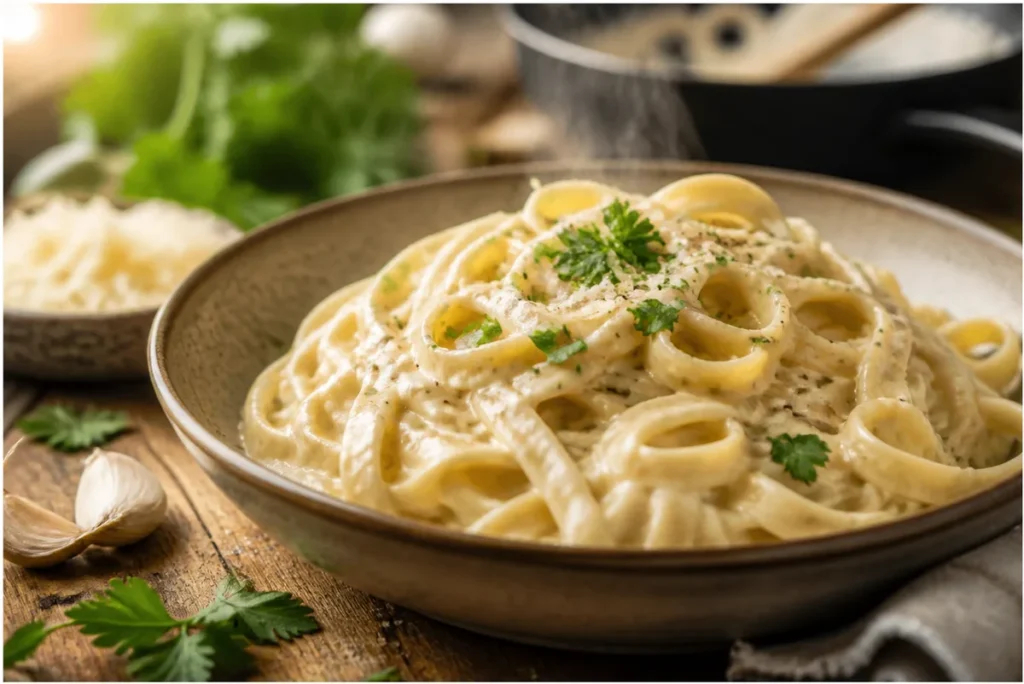
The first time I made Alfredo sauce from scratch, I expected a restaurant-style finish and got a grainy, over-salted mess instead. Since then, I’ve learned that great Alfredo is less about complicated technique and more about gentle heat, good cheese, and knowing when to stop cooking. This Alfredo Sauce Recipe for Creamy Pasta and More gives you a silky, buttery sauce in about 15 minutes.
My easy Alfredo sauce recipe uses simple ingredients you can find in most kitchens: butter, garlic, heavy cream, and freshly grated Parmesan. It coats pasta beautifully, but it also works as a sauce for chicken, roasted vegetables, shrimp, and warm bread. Once you taste homemade Alfredo sauce, the jarred version feels pretty flat.
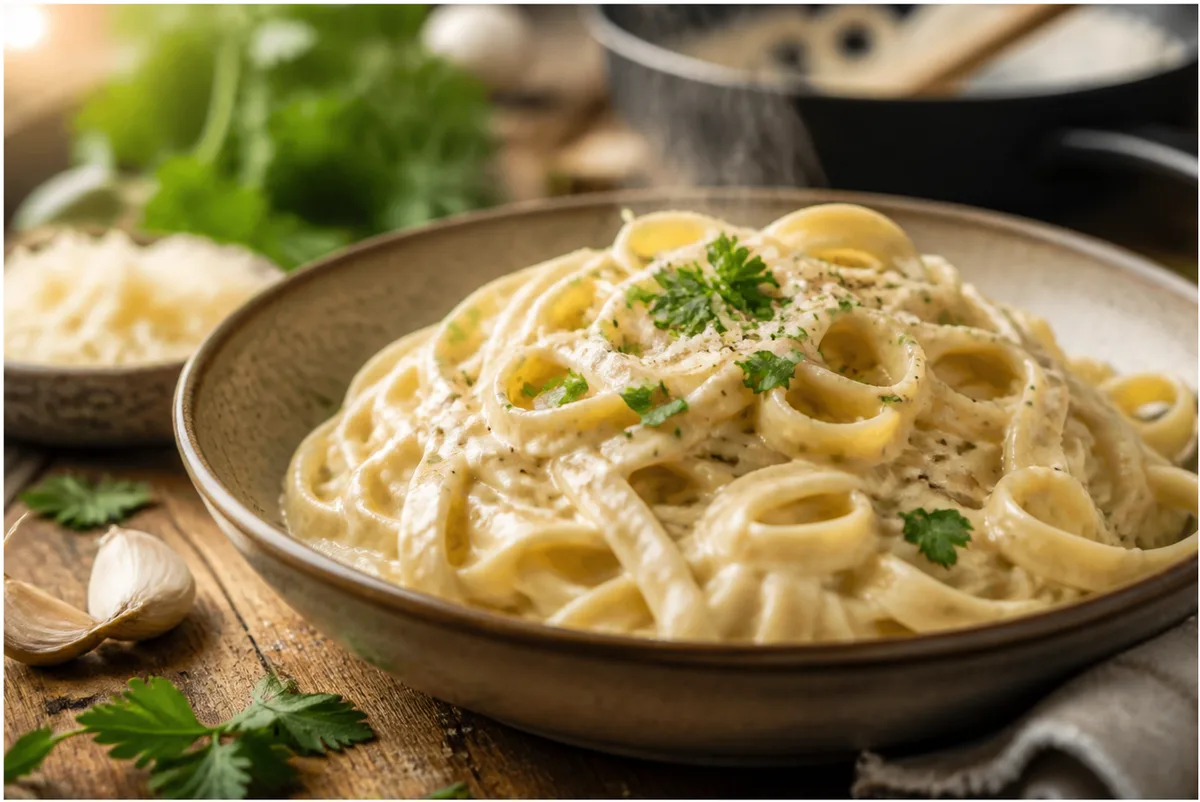
Table of Contents
- Why This Alfredo Sauce Recipe Earns a Spot in My Weekly Rotation
- What Makes This Homemade Alfredo Sauce So Smooth
- Ingredients You’ll Need for This Creamy Pasta Sauce
- Making Alfredo Sauce Recipe for Creamy Pasta and More From Scratch
- Small Details That Make This Easy Alfredo Sauce Recipe Work
- Flavorful Ways to Change This Best Alfredo Sauce From Scratch
- How to Serve Alfredo Sauce Recipe for Creamy Pasta and More
- How to Store, Freeze, and Reheat Alfredo Sauce
- Frequently Asked Questions About Alfredo Sauce Recipe for Creamy Pasta and More
- Make This Creamy Garlic Parmesan Sauce Your Own
Why This Alfredo Sauce Recipe Earns a Spot in My Weekly Rotation
- It comes together in under 15 minutes with no special equipment.
- Simple pantry-friendly ingredients create rich, restaurant-style flavor.
- The creamy garlic Parmesan sauce works with pasta, chicken, seafood, and vegetables.
- It’s beginner-friendly, as long as you keep the heat gentle and grate the cheese yourself.
What Makes This Homemade Alfredo Sauce So Smooth
The magic comes from the balance of butter, cream, and Parmesan. Butter adds a rounded richness, cream creates the silky base, and freshly grated Parmesan brings salty, nutty flavor while naturally thickening the sauce. Garlic adds savory depth without overpowering the dairy.
I also use low heat when adding the cheese. Pre-shredded Parmesan can contain starches that leave the sauce gritty, so I grate a wedge of Parmesan while the cream warms. Homemade wins here because you control the salt, garlic, and thickness instead of opening a jar that tastes mostly like thickeners.
Ingredients You’ll Need for This Creamy Pasta Sauce
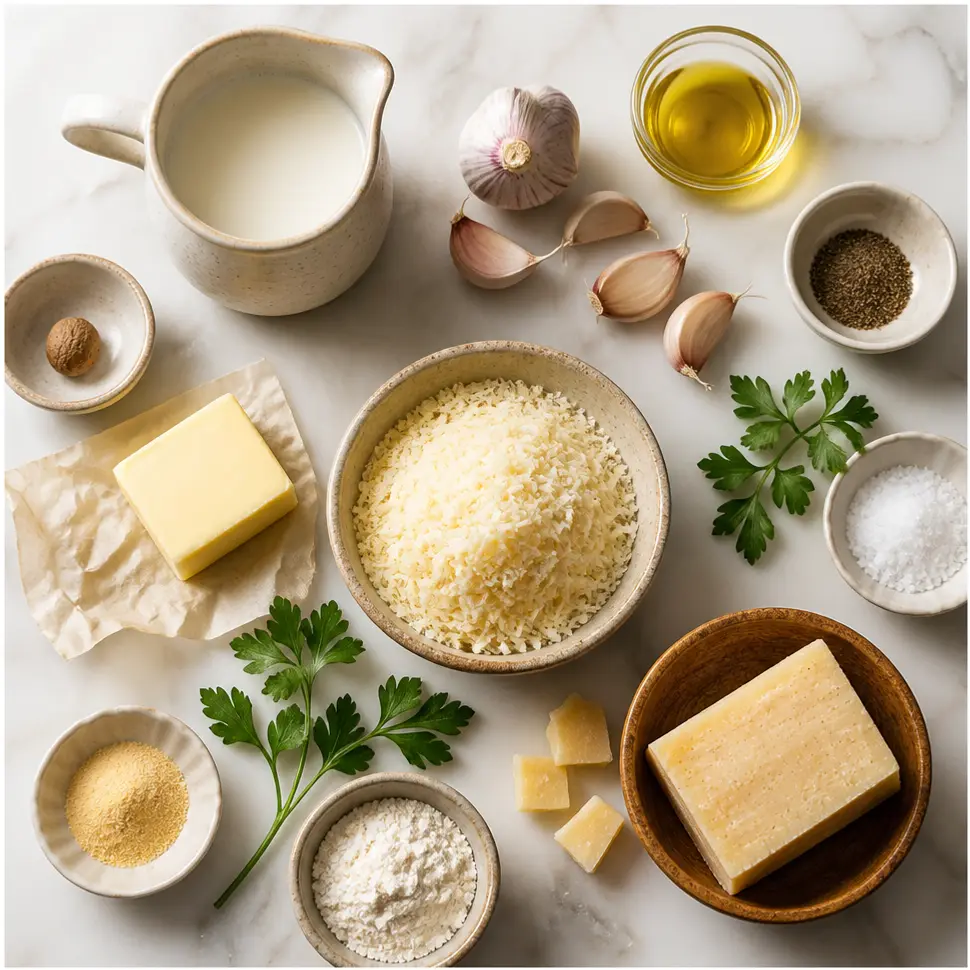
Gather everything before you start. Alfredo moves quickly once the cream hits the pan, and having the cheese ready prevents frantic drawer-opening while your sauce thickens.
- 4 tablespoons unsalted butter: This forms the rich base. Salted butter works, but reduce the added salt.
- 2 garlic cloves, finely minced: Use fresh garlic for the best flavor. You can use 1/2 teaspoon garlic powder in a pinch.
- 1 1/2 cups heavy cream: Heavy cream gives the sauce body and helps it stay smooth. Half-and-half makes a lighter sauce but may need a little longer to reduce.
- 1 cup freshly grated Parmesan cheese: Grate it finely so it melts quickly. Pecorino Romano creates a sharper, saltier variation.
- 1/4 teaspoon fine sea salt, plus more as needed: Parmesan already brings salt, so taste before adding extra.
- 1/4 teaspoon freshly ground black pepper: Pepper balances the richness and adds gentle warmth.
- 1 tablespoon chopped fresh parsley, optional: Parsley adds color and a fresh finish.
- 12 ounces cooked fettuccine or another pasta: Reserve 1/2 cup of the pasta water before draining to adjust the sauce.
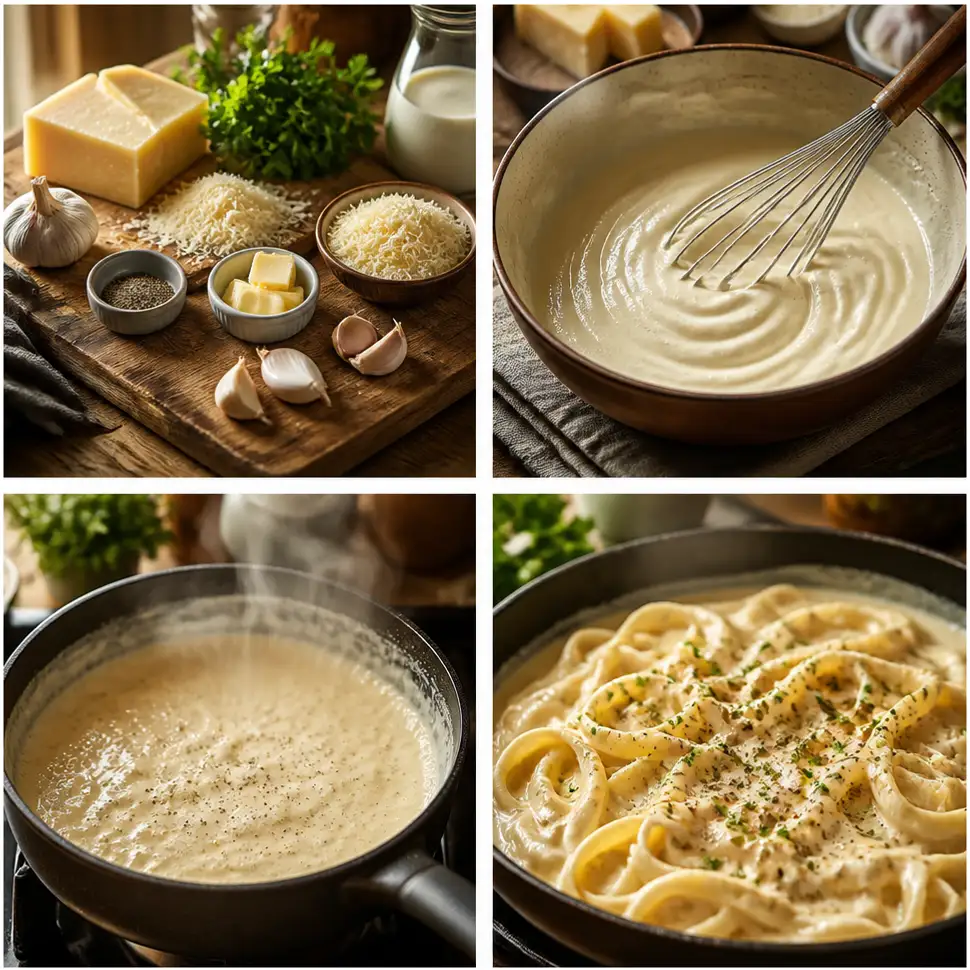
Making Alfredo Sauce Recipe for Creamy Pasta and More From Scratch
- Boil a large pot of well-salted water, then cook the pasta until just tender according to the package directions. Before draining, scoop out 1/2 cup pasta water. The pasta should still have a slight bite because it will finish in the sauce.
- Melt the butter in a large skillet over medium-low heat. When it looks glossy and begins to foam gently, add the garlic. Keep the heat modest so the garlic softens without turning brown.
- Sauté the garlic for 30 to 45 seconds, stirring constantly. It should smell fragrant and savory, not sharp or toasted. Burned garlic will make the entire sauce taste bitter, so lower the heat if it starts coloring.
- Pour in the heavy cream and stir with a wooden spoon or silicone spatula. Bring it to a gentle simmer, not a rolling boil. Small bubbles around the edge are exactly what you want.
- Reduce the cream for 3 to 4 minutes, stirring occasionally. It should look slightly thicker and coat the back of a spoon, but it should still flow easily. Over-reducing at this stage can make the finished sauce too heavy.
- Lower the heat to its lowest setting, then add the Parmesan a small handful at a time. Whisk after each addition until smooth before adding more. This slow approach keeps the cheese from clumping.
- Season with black pepper and a small amount of salt. Taste carefully because Parmesan varies in saltiness. The sauce should taste buttery, garlicky, and savory, with a smooth texture that slips from the spoon.
- Toss the drained pasta into the skillet. Add a splash of reserved pasta water and stir for 30 to 60 seconds. The starch helps the sauce cling to every strand, while the pasta’s heat finishes the emulsification.
- Adjust the consistency with more pasta water, 1 tablespoon at a time, if the sauce feels too thick. If it looks thin, let the pasta and sauce sit over low heat for another minute while stirring gently.
- Garnish with parsley and another light dusting of Parmesan. Serve immediately, while the sauce is glossy and loose enough to coat the pasta.
Small Details That Make This Easy Alfredo Sauce Recipe Work
- Grate Parmesan from a wedge. Finely grated cheese melts more evenly than thick shreds. Pre-grated cheese can create a sandy texture.
- Keep the heat low after adding cheese. High heat can cause the dairy and butter to separate, leaving an oily sauce.
- Use pasta water as your texture control. A tablespoon or two loosens thick sauce without watering down the flavor.
- Don’t oversalt early. Taste after the Parmesan melts, then add salt only if needed.
- Serve right away. Alfredo thickens as it cools, so get the plates ready before you finish the sauce.
- Fix a broken sauce gently. Remove it from the heat and whisk in warm water, cream, or pasta water one tablespoon at a time until it looks smooth again.
Flavorful Ways to Change This Best Alfredo Sauce From Scratch
- Make it spicy: Add 1/4 teaspoon crushed red pepper flakes with the garlic.
- Add protein: Stir in sliced grilled chicken, sautéed shrimp, or crisp cooked bacon.
- Bring in herbs: Add a teaspoon of chopped thyme, basil, or rosemary with the Parmesan.
- Try a lemon finish: Stir in 1 teaspoon lemon zest and 1 teaspoon lemon juice for seafood or roasted vegetables.
- Make it gluten-free: Use certified gluten-free pasta and check that every packaged ingredient is labeled gluten-free. The sauce itself contains no wheat.
- Create a dairy-free version: Use plant-based butter, unsweetened dairy-free cream, and a dairy-free Parmesan alternative. The flavor will be different, but the same gentle cooking method still helps create a smooth sauce.
How to Serve Alfredo Sauce Recipe for Creamy Pasta and More
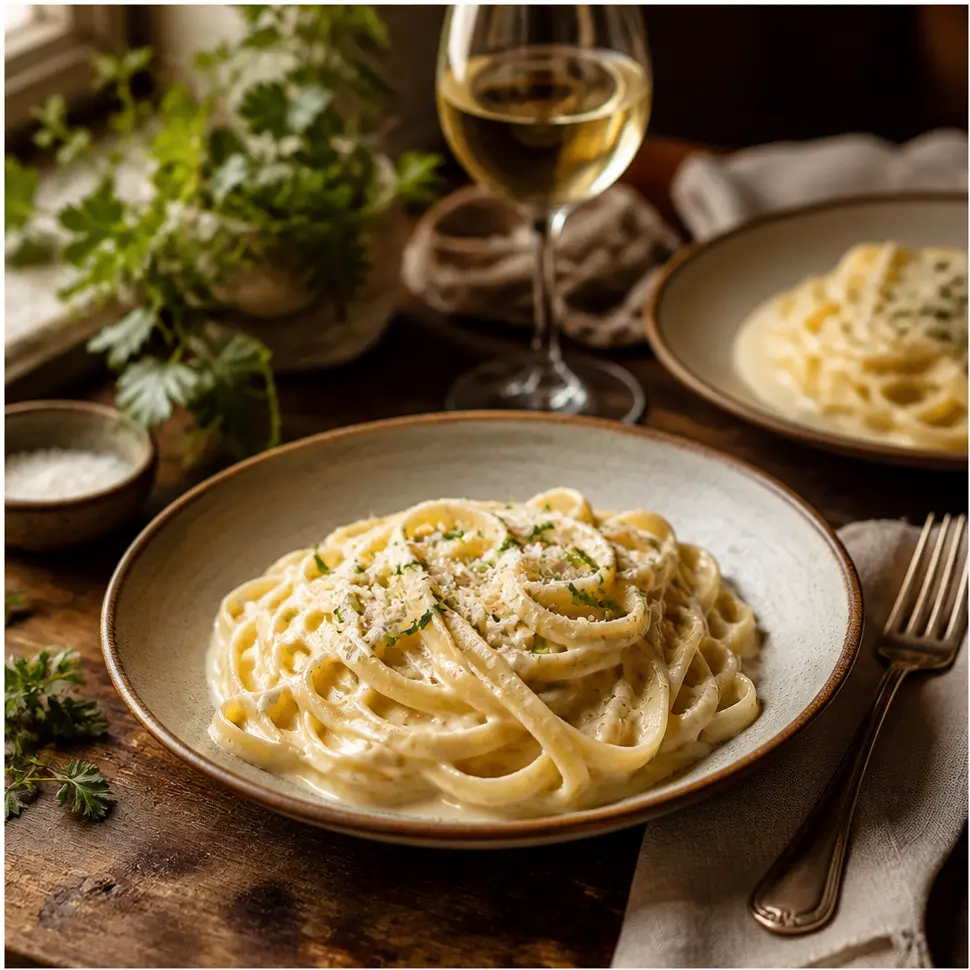
Toss this sauce with fettuccine for an easy fettuccine Alfredo sauce that feels special enough for guests but simple enough for Tuesday night. Add grilled chicken and steamed broccoli, then finish with parsley and black pepper for a complete meal.
You can also spoon it over roasted cauliflower, baked potatoes, or sautéed mushrooms. For a party, serve it as a warm dipping sauce with toasted bread, though keep it warm because it thickens quickly at room temperature.
For the prettiest plates, twirl the pasta with tongs and place it in warm bowls. Add a little Parmesan at the table rather than burying the glossy sauce under a mountain of cheese.
How to Store, Freeze, and Reheat Alfredo Sauce
Refrigerate leftover Alfredo in an airtight container for up to 3 days. Cool it promptly and store it at 40°F or below, following USDA leftover safety guidance.
Freeze the sauce for up to 1 month in a freezer-safe container, leaving a little room for expansion. Cream sauces may separate after freezing, so thaw them overnight in the refrigerator and reheat them slowly in a saucepan over low heat. Whisk in a splash of cream or milk until smooth, and never bring the sauce to a hard boil.
For make-ahead meals, prepare the sauce a few hours in advance and refrigerate it. Rewarm it gently, then loosen it with warm cream or pasta water before tossing with freshly cooked pasta.
This sauce takes 5 minutes to prep, 10 minutes to cook, yields about 2 cups, serves 4 with pasta, and is easy enough for beginner cooks.
Frequently Asked Questions About Alfredo Sauce Recipe for Creamy Pasta and More
You can use half-and-half or whole milk instead of heavy cream, but the sauce will be lighter and thinner. Simmer it gently a little longer and use pasta water sparingly so the finished sauce still coats the noodles.
How do I make Alfredo sauce thicker?Simmer Alfredo sauce gently for 1 to 2 additional minutes, then whisk in more finely grated Parmesan. Avoid boiling it, because high heat can make the sauce separate instead of thickening smoothly.
Can Alfredo sauce be frozen?Yes, Alfredo sauce can be frozen for up to 1 month in an airtight freezer-safe container. Thaw it in the refrigerator and reheat it slowly with a splash of cream, milk, or pasta water to help restore its texture.
Is Alfredo sauce gluten-free?Traditional Alfredo sauce is gluten-free because it contains butter, cream, Parmesan, garlic, salt, and pepper. Serve it with certified gluten-free pasta and check packaged substitutions for wheat-based additives.
Does Alfredo sauce need flour?Alfredo sauce does not need flour when you use cream and Parmesan. The cheese and gentle reduction provide enough body for a smooth pasta sauce without a roux.
Why did my Alfredo sauce turn grainy?Grainy Alfredo usually results from pre-shredded Parmesan or heat that is too high. Use finely grated cheese from a wedge and remove the skillet from intense heat while whisking it into the warm cream.
When should I add pasta water to Alfredo sauce?Add reserved pasta water after tossing the cooked pasta with the sauce, starting with 1 tablespoon. The starchy water loosens thick sauce and helps it cling to the noodles without making it watery.
How do I reheat homemade Alfredo sauce without separating it?Reheat homemade Alfredo sauce in a saucepan over low heat, stirring often. Add a small splash of cream or milk and stop heating as soon as the sauce is hot and smooth, since boiling encourages separation.
Make This Creamy Garlic Parmesan Sauce Your Own
This homemade Alfredo sauce recipe is one of those dependable basics that makes dinner feel instantly more comforting. Keep the heat gentle, grate the cheese fresh, and trust your eyes when the sauce turns glossy and coats the spoon.
If you make it, leave a comment or rate the recipe so I can hear how it worked in your kitchen. Save it for your next pasta night, and share it on Pinterest for the next time you need a quick Alfredo sauce that tastes homemade.